
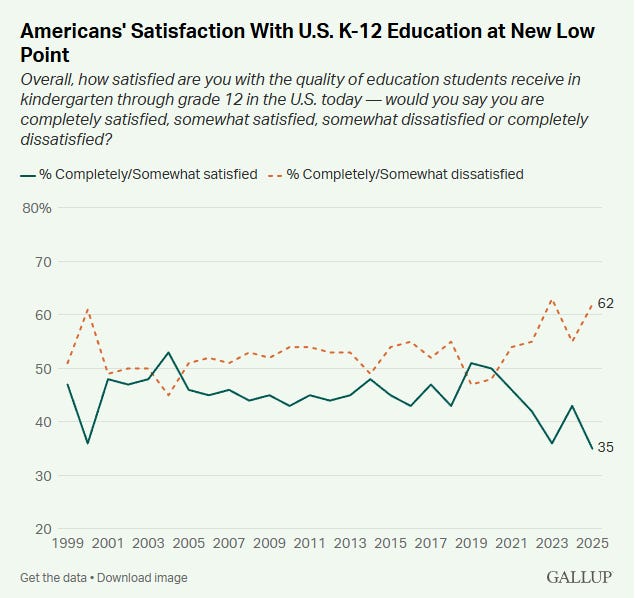
Americans have grown deeply pessimistic about the future of education, and it’s not hard to see why. Gallup finds that overall satisfaction with K–12 schools is at a record low, with just 35 percent of Americans satisfied.
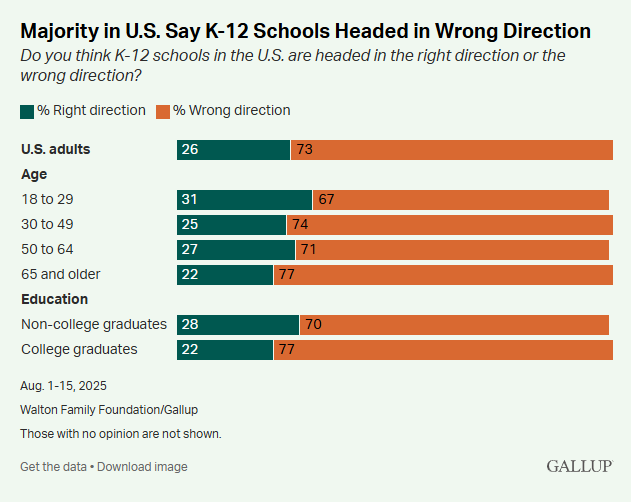
A Gallup survey on August 2025 showed over 70% now believe schools are headed in the wrong direction.
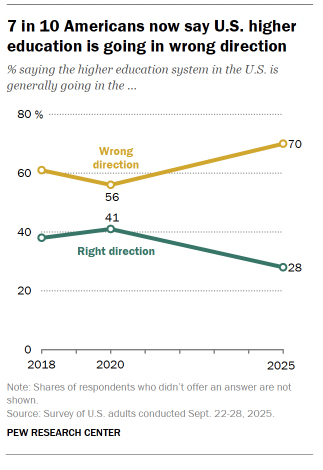
Confidence in the university system has fallen as well, and according to a September 2025 Pew survey, only 28% of Americans now believe higher education is headed in the right direction.
Beneath this pessimism lies something even more troubling: K-12 student performance has been deteriorating for over a decade,
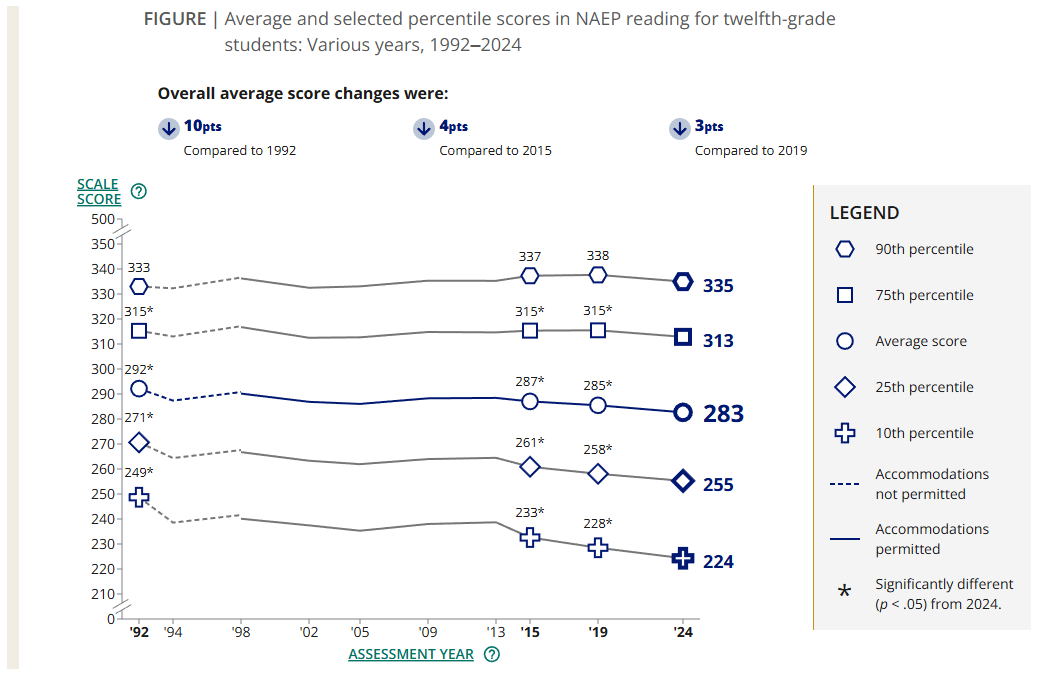
and the declines are steepest among the lowest-performing students, especially in reading and math.
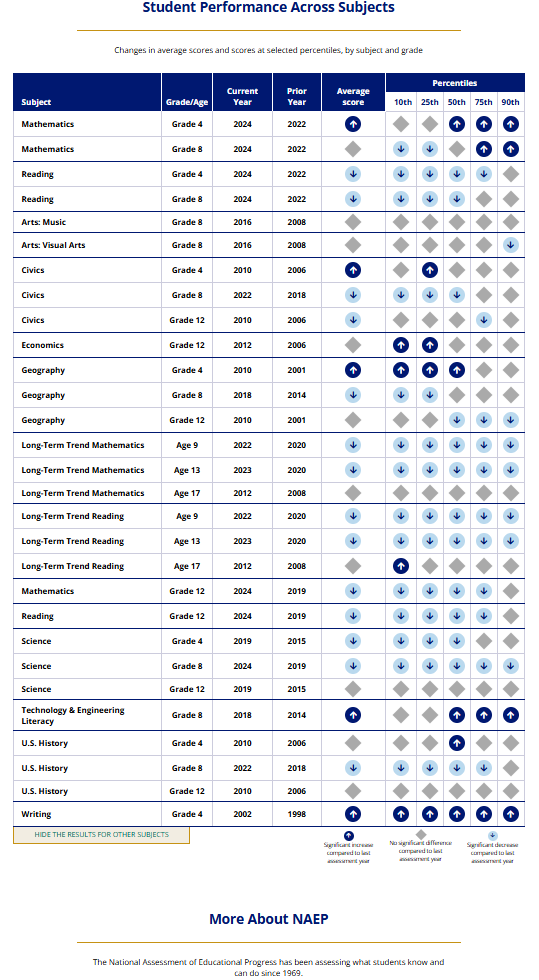
Against this backdrop, the familiar line- “Our kids are screwed”- starts to feel less like pessimism and more like recognition of a real problem.
Much of this decline stems from the structure of the system itself. Public education is governed by overlapping layers of politics, regulation, and bureaucracy caused by state legislatures, federal mandates, school boards, unions, interest groups, and shifting cultural pressures. With so many veto points, even sensible reforms get diluted or blocked. Even the most dedicated public-school principals must navigate a maze of shifting mandates and political demands, often leaving the interests of students trailing behind the system’s priorities.
That’s why my recent interview with Meera Viswanathan, Head of School at The Ethel Walker School (Walker’s), felt like a glimpse into a different universe. Walker’s is an independent, all-girls school in Simsbury, Connecticut, serving grades 7 through 12, with about half its students boarding and half attending as day students. It also offers generous, needs-based financial aid (about half of all students receive assistance), which widens access while preserving a tightly aligned community. Under Meera’s leadership, the school has become a model of mission-driven innovation; an example of what can happen when a school has clarity of purpose and the freedom to act on it.
Walker’s mission is to empower young women intellectually, ethically, emotionally, and physically. But what stands out most is how that mission becomes operational: the administration, teachers, parents, and alumnae are all aligned around improving the skills, confidence, and long-term flourishing of the students. That alignment, rare in large, politically governed systems—is the quiet engine that makes the mission achievable. Graduates often show a level of presence and self-assurance that Meera recognized instantly in her former university students when she was a tenured professor at Brown University in her former career. That confidence is not accidental. It is cultivated.
This clarity and alignment make it possible for Walker’s to introduce programs that many schools only talk about. One of the most distinctive innovations is Walker’s tax-preparation initiative. The school realized that mastering tax preparation was a tough but achievable challenge for every student (and every junior actually passes the IRS-administered Volunteer Income Tax Preparation (VITA) exam) which is a real-world competency that builds confidence, numeracy, and civic engagement. Students then apply this skill directly in the Hartford community, helping families claim guaranteed tax credits and refunds. Over the six years they have done this community partnership work, the students have returned more than a million dollars to local families; a tangible outcome that captures the power of Walker’s mission in practice.
Another innovation is Walker’s student investment program. Each student manages a $1,000 portfolio during her time at Walker’s, learning how markets work, how to evaluate risk, and how to make disciplined, long-term decisions. When students graduate, they return the original $1,000 so a new student can take their place, and the profits from each class are split with a charity of their choice and with the school through a class gift; it’s a rare, hands-on experience in financial agency. At Walker’s, it becomes part of how girls learn to trust their judgment and take ownership of their futures.
Together, these examples highlight something important: Walker’s succeeds not because it has discovered a secret formula, but because it has aligned its culture, curriculum, and expectations around a coherent purpose. It has the freedom to pilot new programs, refine them, and scale them. And its graduates demonstrate the payoff in their performance in college, in the workplace, and in leadership roles where confidence and capability matter.
This essay only scratches the surface of my conversation with Meera, and I’d encourage readers to spend time with the full interview to hear the depth of her perspective.
See the full interview on my YouTube channel Exploring Prosperity.
Our pessimism about the US education system may be warranted, but what’s happening at Walker’s makes clear that innovation is alive. The deeper question is whether American education can regain the willingness and capability to adopt what works because that is how we strengthen the talent and potential of the next generation.
Thank you very much to our sponsors:
Truflation: Truflation: BUY Truflation products/services and save 10% using code BOBDEW10. Learn about what prices are actually doing by going to https://truflation.com/marketplace/us-inflation-rate
Foundation: Protect your Bitcoin using the latest off-line technology with easy-to-use Passport. Their next product, Passport Prime will protect all passwords off-line with even-better technology. https://foundation.xyz/
River Financial: If not cold storage for your Bitcoin, I’d highly recommend River for buying and holding- River is engineered to protect your Bitcoin over the long run. Use this link for discounts: https://river.com/signup?r=T7GGAF7G