
I was honored to have a conversation with Lyn Alden about the real dangers of US indebtedness and structural deficits, which have both increased to levels that are more likely to continue to get worse than begin to be resolved. Lyn Alden, a highly respected macroeconomist and investment strategist known for her in-depth analysis of global financial systems, uses a meme for this: "No one can stop this train."
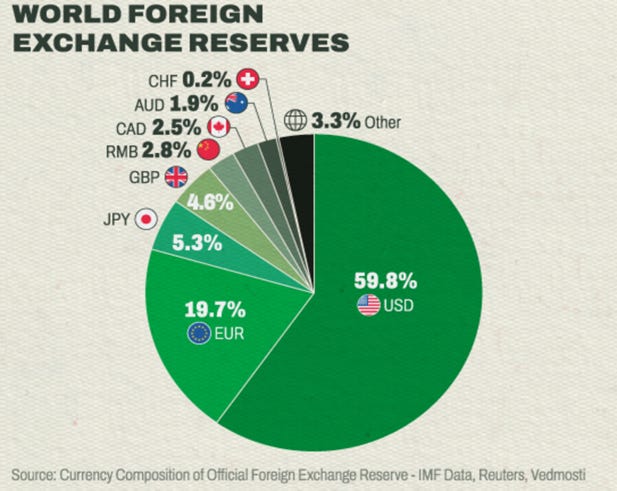
Our conversation examined the role of the U.S. dollar as the global reserve currency. This status has long been viewed as a key factor enabling the United States to sustain its persistent fiscal deficits and accommodative monetary policies. The ongoing demand for dollars has allowed the Treasury to continue financing substantial deficits through bond sales.
However, this reliance on reserve currency status is a double-edged sword. Many experts warn that the potential loss of this position could trigger a severe economic crisis. Our discussion explored the implications of this scenario and its potential impact on the U.S. economy.
Thank you to our sponsor Truflation. Learn more at www.truflation.com.
In this conversation, we spoke about:
What gives a currency "reserve status"
What factors contribute to the US Dollar's long reign
What does the life cycle look like?
What are the seeds of its own destruction?
Does the world need a reserve currency?
What is a better system?
Key points from our discussion:
A) Characteristics of a reserve currency
B) Historical development of US Dollar as reserve currency
C) Long-term self-defeating nature of reserve currencies
D) Policy decisions affecting reserve status
Main conclusions:
Our debt and structural fiscal deficits pose serious risks to the US economy and the US dollar, but the dollar is unlikely to lose its status in the near term.
However, like any reserve currency, it cannot be sustained over the long run.
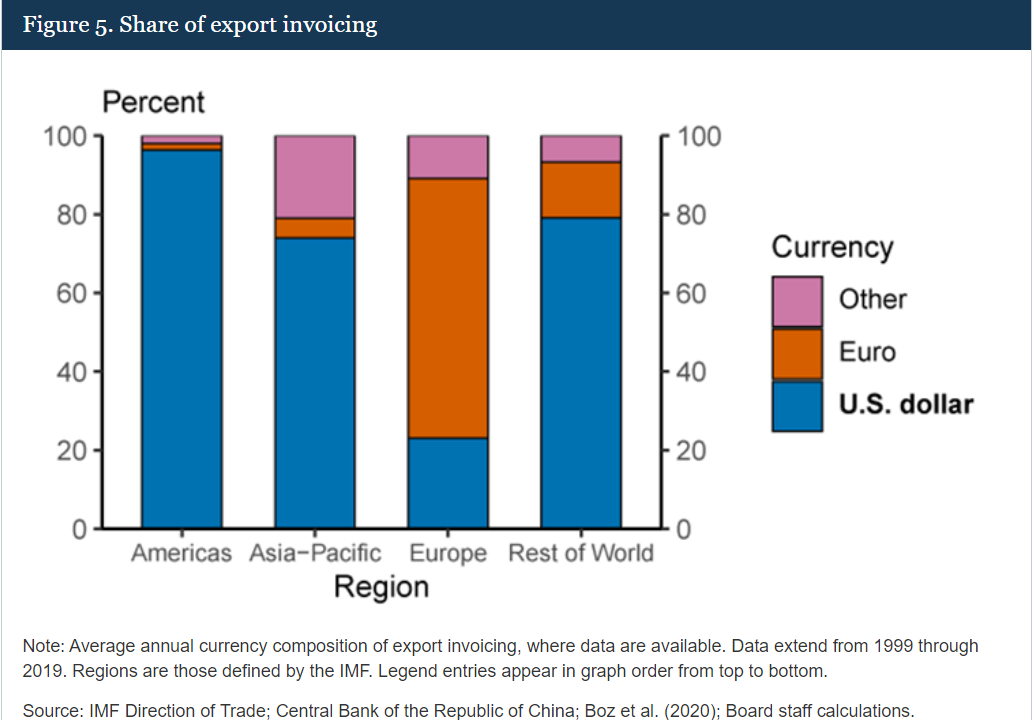
The network effects of the dollar's dominance make rapid erosion unlikely due to structural and inflexible demand for USD in global trade.
Reserve currency status ultimately undermines itself by exacerbating economic imbalances between the host nation and developing economies, driven by persistent distortions in global trade flows.
Policy decisions, such as censorship, fiscal policies, and monetary actions, can significantly impact reserve currency status.
Details
1. Characteristics of a reserve currency:
a. Widely held by central banks globally
b. Large base of economic activity domestically and internationally
c. Significantly higher liquidity than other currencies
d. Largest currency used for financing activity
e. Conclusion: Network effects make rapid erosion of US dollar dominance unlikely due to structural demand in global trade
2. How the US Dollar achieved reserve status:
a. Bretton Woods agreement (post WWII) pegged major currencies to US Dollar, and US dollar to gold
b. 1950s-60s: Increased money supply and bank lending led to more dollars circulating abroad (Eurodollars); gold reserves declined as dollars were redeemed
c. 1971: Nixon removed dollar's gold redeemability
d. 1974: US-Saudi Arabia agreement:
i. US to buy oil
ii. Saudi Arabia to sell oil in dollars globally, ensuring long-term dollar demand
iii. Saudi Arabia to purchase US debt, supporting deficit spending
iv. Effectively backed US dollar with oil
e. Offshore dollars grew with global financial and oil sectors
3. Long-term effects of reserve currency status:
a. Benefits financial sector and government, but potentially harmful to industrial base
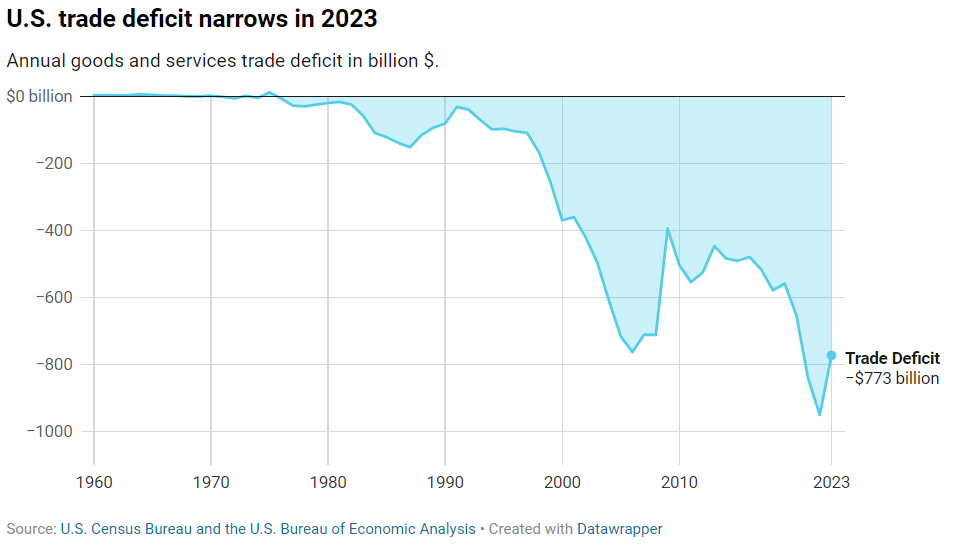
b. Persistent trade imbalances affect domestic economy:
i. Weakened exports (hollowing out of low-margin production)
ii. Strengthened imports (boosting consumerism)
c. US goods face reduced global competitiveness
d. Foreign producers gain competitiveness
4. Policy decisions affecting reserve status:
a. Financial censorship (freezing or seizing assets)
b. Fiscal deficit management
c. Monetary policy:
i. Tightening: Increases economic pressure on foreign countries
ii. Easing: Decreases value of dollar-based assets and reserves
d. Management of currency or gold reserves (potential inclusion of Bitcoin?)
5. Potential challenges to US dollar dominance:
a. Rise of alternative reserve currencies (e.g., Euro, Chinese Yuan)
b. Increasing use of digital currencies and cryptocurrencies
c. Geopolitical shifts and changing global trade patterns
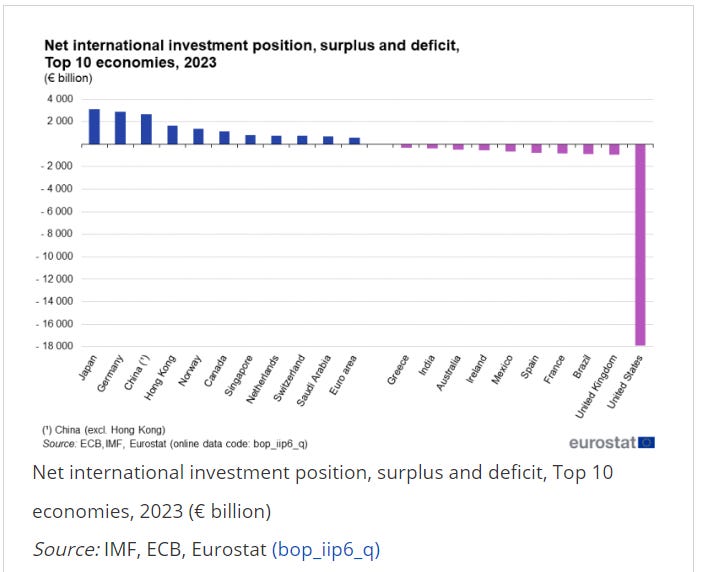
Some seek comfort in our fiscal situation by comparing US Debt:GDP of 120% to Japan’s at 220%… however, this is misleading. Japan, as a creditor nation, maintains a positive net international investment position. Decades of trade surpluses have allowed Japan to reinvest in foreign assets and securities, generating income that supports its currency and domestic spending.
In contrast, the US is a debtor nation with reserves of only about 2% of GDP, primarily in long-held gold stocks, compared to 10-15% or more for most other nations and 24% for Japan. Years of US trade deficits have resulted in an extremely negative net investment position. Consequently, lenders (buyers of US Treasuries) must rely on the strength of the US economy and its ability to service debt to continue funding fiscal deficits. This situation is potentially more vulnerable to erosion than that of creditor nations like Japan."
Another development that made our conversation timely was JD Vance’s acceptance speech last week where he questioned whether the dollar's global reserve status still benefits the United States as a whole. This echoed more forceful statements about potentially devaluing the dollar from other Trump advisors. Alden highlighted the methods that the US government could devalue the dollar: i) use dollars to purchase other currencies or hard assets like gold which increases dollars in the system, ii) pressure other countries with currency reserves to weaken their currencies by buying dollars, ii) pressure the Fed to lower interest rates, iv) impose taxes foreign purchases of US assets or otherwise make US assets less attractive to buy. The likely impact of this would be higher domestic production as well as higher inflation.
“How We Can Make It Better”
(Source: My interview and Broken Money: Why Our Financial System is Failing Us and How We Can Make it Better; Chapters 10 & 11, by Lyn Alden)
Throughout history, gold has been humanity's most trusted monetary base. However, when currencies devalue rapidly, people seek stability. The constraints that gold placed on governments became problematic as faster communications enabled growing international commerce. This led to larger ledger balances of gold, which became increasingly expensive and impractical to transport and secure.
Bitcoin has emerged as a solution to these constraints. As Alden points out in our interview, "It's a money that no single entity controls, and it has no long-term supply inflation. In that sense, it's actually more sound than gold. Unlike gold, if a nation wants to sell, buy, or transfer Bitcoin to another nation, that can be done within an hour."
This benefit extends beyond countries and economies to the personal level, as Alden explains:
"We must consider the global context, where approximately 160 currencies exist. Most of these have little to no global acceptance and debase rapidly. Many even experience hyperinflation and resets within a generation or two. Consequently, people in these countries constantly seek assets to protect their wealth.
"They find themselves on an income treadmill, struggling to keep pace with currency debasement. Take Egypt, for example, where annual money supply growth is around 20%. If wages don't increase by a similar percentage yearly, individuals effectively lose purchasing power. The pressure to outpace this debasement is relentless.
"This is where new technologies like Bitcoin and stablecoins become particularly interesting, offering potential solutions to these challenges."
Alden gains firsthand insight into the impact of high inflation and currency erosion by spending part of each year in Egypt visiting relatives. In a recent newsletter (subscribe HERE), she described how Egyptians cope with these economic challenges:
"Many Egyptians rely on physical US dollars or gold for liquid savings. During periods of currency stress, when the government maintains an unsustainable currency peg, an informal network of cash and gold brokers emerges. These 'black market' brokers provide genuine price discovery and liquidity for citizens seeking monetary assets at real exchange rates.
"In response, the government often imposes capital controls to maintain its currency monopoly and peg. Meanwhile, younger, tech-savvy investors are turning to Bitcoin, which has outperformed traditional assets. While not yet mainstream, Bitcoin's ability to bypass traditional financial systems makes it difficult for authorities to regulate. Despite warnings from the Central Bank of Egypt, millions continue to engage with cryptocurrencies."
The erosion of the US dollar's reserve status is partly evidenced by the growing BRICS alliance, which offers an alternative to global trade in US dollars. However, this alliance faces challenges due to its inherent political diversity and inferior liquidity compared to the dollar. These factors limit the network effects that have historically bolstered the dollar's dominance in global trade.
Alden argues that Bitcoin has the potential to become a reserve currency "over the long arc of time." This shift could mirror how people in developing countries with weak currencies currently move their savings into stronger currencies like the US dollar. As the purchasing power of the US dollar weakens, there will likely be an increasing trend towards even harder currencies, such as gold and Bitcoin.
Bitcoin's fixed supply and global accessibility make it an attractive option for preserving wealth against inflation and currency debasement. As its adoption grows, Bitcoin could challenge traditional currencies and bond markets in developed economies. This could potentially lead to a reevaluation of excessive debt in nations like the US, Europe, and Japan, and a wider acceptance of cryptocurrencies, as exemplified by El Salvador's recognition of Bitcoin as legal tender
The US faces a paradox: growing national debt poses significant long-term risks, yet the dollar's reserve status remains resilient due to its entrenched position in global trade and unmatched liquidity. While this provides a buffer against immediate decline, it shouldn't breed complacency. As the debt burden increases, Bitcoin emerges as a potential hedge and long-term solution. Its fixed supply and decentralized nature offer an alternative to those concerned about fiscal imbalances and currency debasement. While the dollar's dominance persists for now, the rise of cryptocurrencies and the need for sound money highlight the evolving landscape of global finance. Balancing these forces will be crucial for the future of the US economy and its currency's role on the world stage.