
It is well-known and well-criticized that the developed world has seen an explosion in deficit spending and total debt.
Here it is graphically for 2022 vs 50 years ago 1972 (source: IMF):
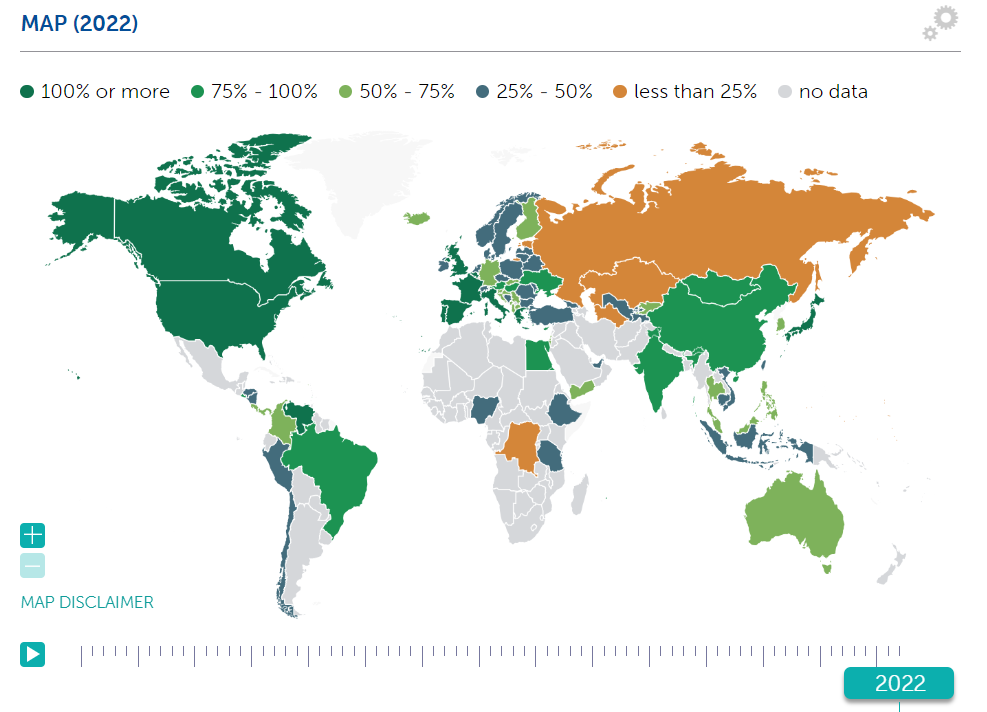
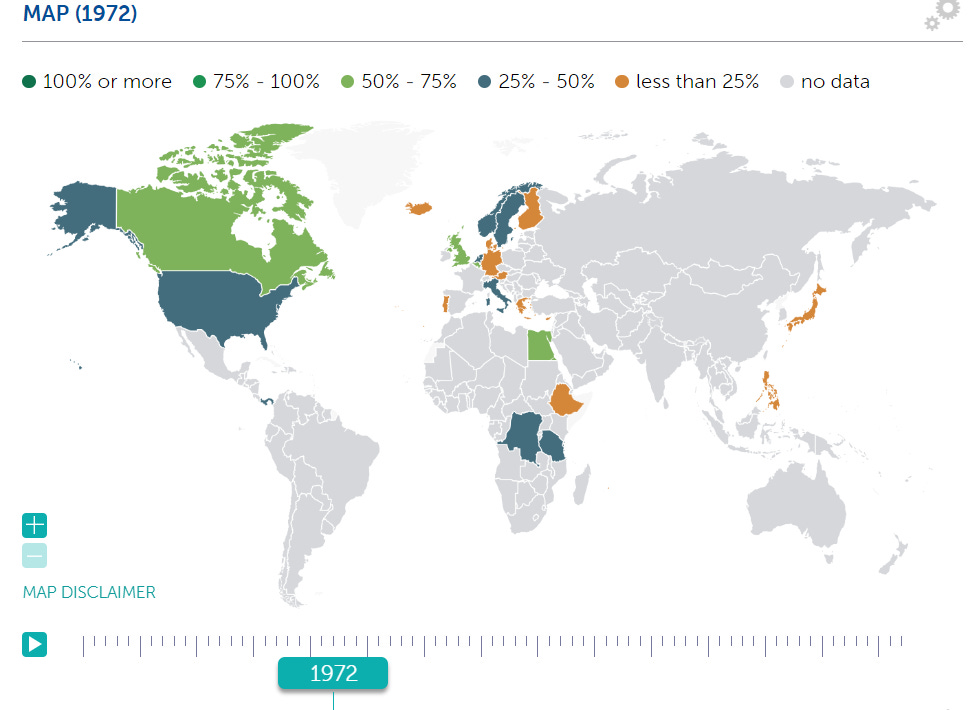
The OECD shows total General Government Debt:GDP at 121% as of 2022.
These are record levels of debt, and it is commonly believed that the US will never be able to pay back that debt, especially because i) the unfunded liabilities so far exceed the $34 Trillion of US debt and annual fiscal deficits seem impossible for politicians to reverse.
Governments have only two options when debt surpasses the ability to repay: Default and/or Debasement. Politicians fear Default will force them from power and for good reason- it is a shock to the system with many powerful losers.
Debasement has been the choice throughout history. What is it and what form does it take? Dilution and Financial Repression.
Dilution: Until 1971, currencies were always connected to gold, or other forms of “scarce” commodities, so debasement was reducing the amount of currency per unit of the commodity. In ancient times, it was as simple as diluting gold or silver coinage with other less valuable commodities.
On August 15, 1971, Nixon announced that the US would no longer exchange dollars for gold from foreign governments. This severed the direct link between the dollar and gold, a key pillar of Bretton Woods, and in so doing, removed the external discipline imposed on the US (and all other currencies as well) for managing its currency and federal budgeting. This can be viewed as an experiment because until then, people did not trust governments with currencies.
This greatly improved the ability of governments to debase.
Financial Repression: Governments maintain interest rates BELOW true inflation for a period of time and currencies devalue by the difference.
Watch my interviews with Lyn Alden (HERE) and Russell Napier (HERE) to see how financial repression has worked in the past, how it might unfold going forward, and what the limitations are.
I will write about this idea of “true inflation” shortly because there are very few investors who believe that CPI or PPI can be true measures of inflation- partially because of the conflict of interest embedded in the government’s role of determining inflation.