
On September 9, 2025, two flashpoints underscored how fragile peace remains: Israel struck Hamas leadership in Doha, Qatar—a U.S. ally—while Russian drones crossed into Poland and were shot down by NATO forces.1 Both incidents escalated conflicts that many hoped would stabilize.
Such moments recall the Cuban Missile Crisis of 1962, when the world teetered on nuclear war.
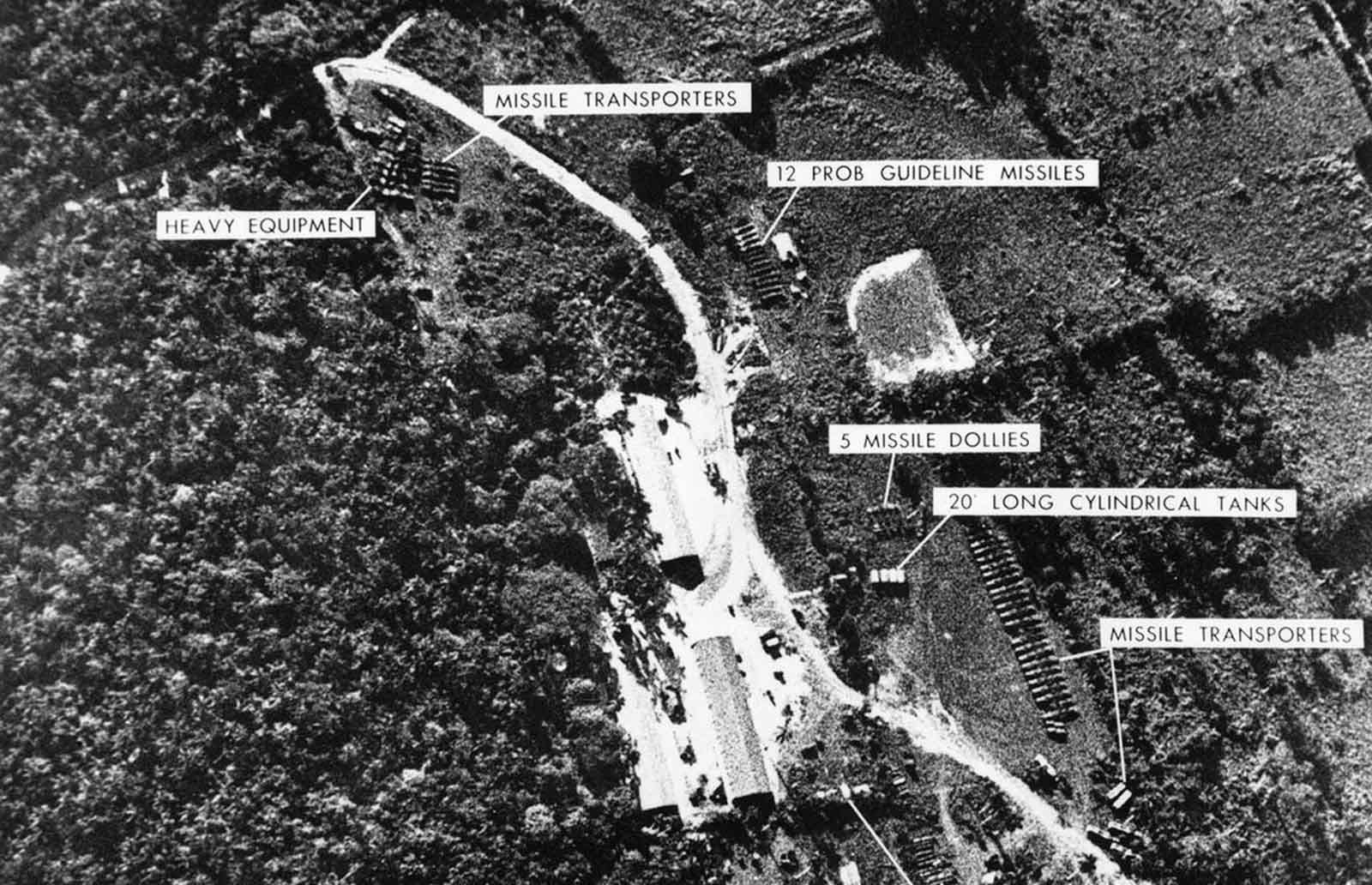
Then, as now, systemic forces—hegemony, nuclear deterrence, trade, and institutions—shaped whether rivals stepped back from catastrophe or stumbled into it.
This essay, the second in a four-part series, examines those global-scale forces and the architecture of stability they created, even as their durability remains uncertain. These recent escalations suggest that the risk of great power conflict may deserve greater weight than it currently receives when we think about the prospects for the next generation.
Hegemonic Stability: Rules from the Center
Political economist Charles Kindleberger once wrote, “For the world economy to be stabilized, there has to be a stabilizer.” After 1945, the United States assumed that role. With nearly half of global GDP and the only intact industrial base, America underwrote security guarantees, sea-lane protection, and institutions like NATO and the IMF.
This echoed Britain’s earlier Pax Britannica (1815–1914), when Royal Navy supremacy reduced the risk of great power conflict. America’s geography reinforced the role: protected by two oceans, it was nearly invulnerable to invasion, a strategic luxury that European powers never enjoyed. Instead of cycles of revenge, Europe and Japan rebuilt under U.S. protection into prosperous democracies, stabilizing the postwar order.
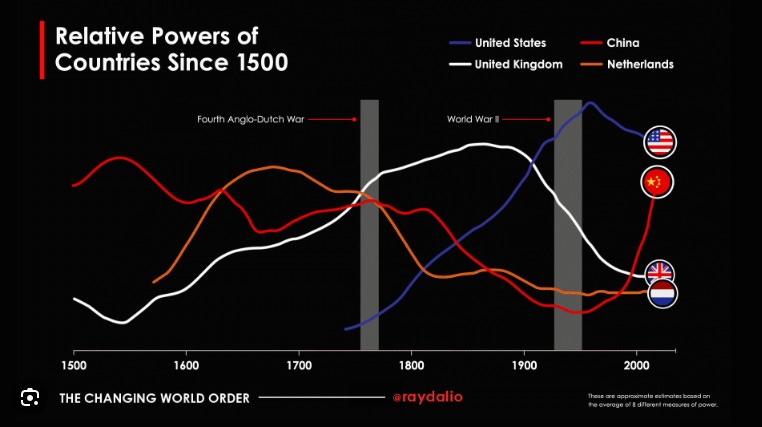
Yet history suggests such dominance never endures indefinitely. In Principles for Dealing with the Changing World Order, Ray Dalio describes a recurring cycle of rising and declining powers, marked by debt accumulation, shifting trade balances, and eventual conflict. By his framework, America’s post-1945 dominance sits near the top of the cycle, but no hegemon has remained unchallenged forever.
Mutually Assured Destruction: Peace Through Terror
If U.S. leadership structured the order, nuclear weapons changed the logic of conflict. Under Mutually Assured Destruction (MAD), any direct war risked civilization’s end. Nobel laureate Thomas Schelling put it bluntly: “The power to hurt is bargaining power.”
The Cuban Missile Crisis showed both peril and restraint. Facing unimaginable losses, Kennedy and Khrushchev accepted compromise rather than catastrophe. The logic of MAD has held for nearly 80 years, channeling rivalries into proxy wars, arms races, and diplomacy instead of direct clashes between the world’s major powers. Still, the system depends on rational leaders and flawless technical systems, leaving peace always one miscalculation away from collapse.
Economic Interdependence: When Trade Becomes Strategy
Modern globalization ties rivals into shared prosperity. The U.S. and China may compete strategically, but their vast trade relationship makes any military conflict extraordinarily costly. Apple relies on Chinese manufacturing; China depends on American technology and markets.
This logic is not new. In 1910, Norman Angell declared in The Great Illusion that “war becomes impossible…because it is futile,” given Britain and Germany’s trade ties. Four years later, they were at war. Interdependence reduces incentives for conflict but cannot erase them. The war in Ukraine has shown how quickly leaders will absorb enormous economic costs when they see existential stakes at play. Recent talk of U.S.–China “decoupling” suggests this deterrent is already weakening.
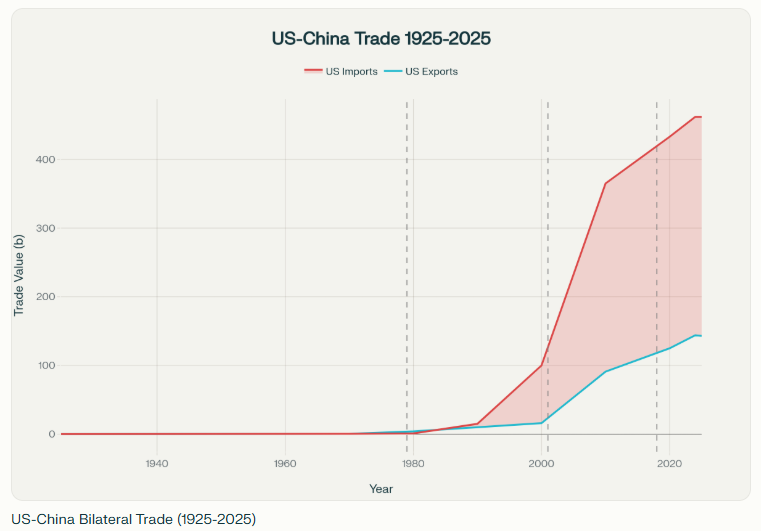
Source: Clark University Archives https://commons.clarku.edu/cgi/viewcontent.cgi?params=/context/hist_disstheses/article/1048/&path_info=Huang_DevelopmentChinasExportTrade_1928.pdf and
Congress.gov https://www.congress.gov/crs-product/IF11284#:~:text=Goods:%20In%202024%2C%20China%20was,to%20the%20data%20firm%20Preqin. and
US Import Data https://www.usimportdata.com/blogs/us-china-trade-war-2024-25-top-imports-exports-reciprocal-tariff-updates
International Institutions: Habits of Cooperation
Since 1945, institutions have reinforced peaceful habits. The European Union transformed a continent of rivals into one of shared laws, borders, and even currency. France and Germany now resolve disputes in Brussels conference rooms instead of battlefields.
The World Trade Organization likewise channels trade grievances into arbitration rather than retaliation. As John Ruggie observed, “Institutions do not eliminate anarchy; they provide the means to manage it.” Yet these structures depend on political will. Russia’s invasion of Ukraine and Britain’s exit from the EU revealed how fragile institutional commitments can be when tested.
Fragile Foundations
These systemic forces have steered the world’s leading powers away from direct war for nearly 80 years, enabling global GDP to grow more than fifteen-fold since 1950 and lifting billions out of poverty. As we have seen, each of these forces may have played a role in restraining conflict, but all have weaknesses—and none is strong enough to explain the Long Peace with complete confidence. Recent escalations in the Middle East and Eastern Europe remind us that these forces can bend under pressure, and their effectiveness cannot be taken for granted.
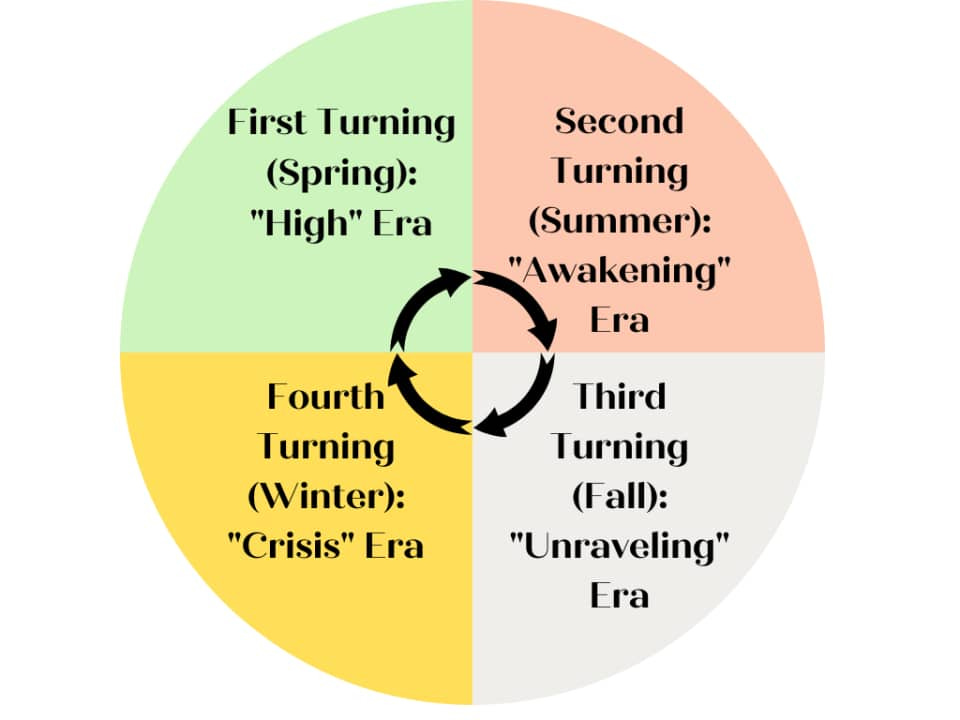
Generational theorists William Strauss and Neil Howe, in The Fourth Turning, warn that every 80 to 100 years societies face a major crisis that reshapes institutions and power structures. If their rhythm holds, today’s international order may be approaching such a test, underscoring how fragile these systems may prove to be.
One additional factor stands out: mature democracies have never fought wars against each other in the modern era, even as their numbers have grown from just two dozen in 1945 to more than 100 today. If the forces we’ve examined here operate at the global level, Essay #3 turns to national choices—how political systems, historical memories, and especially the rise of democracy have shaped whether countries pursue peace or conflict.
Thank you very much to our sponsors:
Truflation: Learn about what prices are actually doing by going to do by going to https://truflation.com/marketplace/us-inflation-rate; BUY Truflation products and services with this code and save 10%: BOBDEW10.
Foundation: Protect your Bitcoin using the latest off-line technology with easy-to-use Passport. Their next product, Passport Prime will protect all passwords off-line with even-better technology. https://foundation.xyz/
River Financial: If not cold storage for your Bitcoin, I’d highly recommend River for buying and holding- River is engineered to protect your Bitcoin over the long run. Use this link for discounts: https://river.com/signup?r=T7GGAF7G
https://www.reuters.com/business/aerospace-defense/poland-downs-drones-first-nato-member-open-fire-during-ukraine-war-2025-09-10/ among many other reports.
So insightful and a bit daunting, let’s hope the fourth turning is less chaotic and more peaceful this time if it comes