
“Inflation is always and everywhere a monetary phenomenon” famously spoke economist Milton Freidman. Most observers think of this as a “money-printing” concept and view it as a Federal Reserve responsibility.
Given that the Fed’s first mandate is controlling inflation and that Fed policies seek to control, and actually do influence the availability of money, this view is reinforced.
But this doesn’t explain why CPI has lagged M2 so significantly over time, and especially since the Great Financial Crisis of 2008-2009.
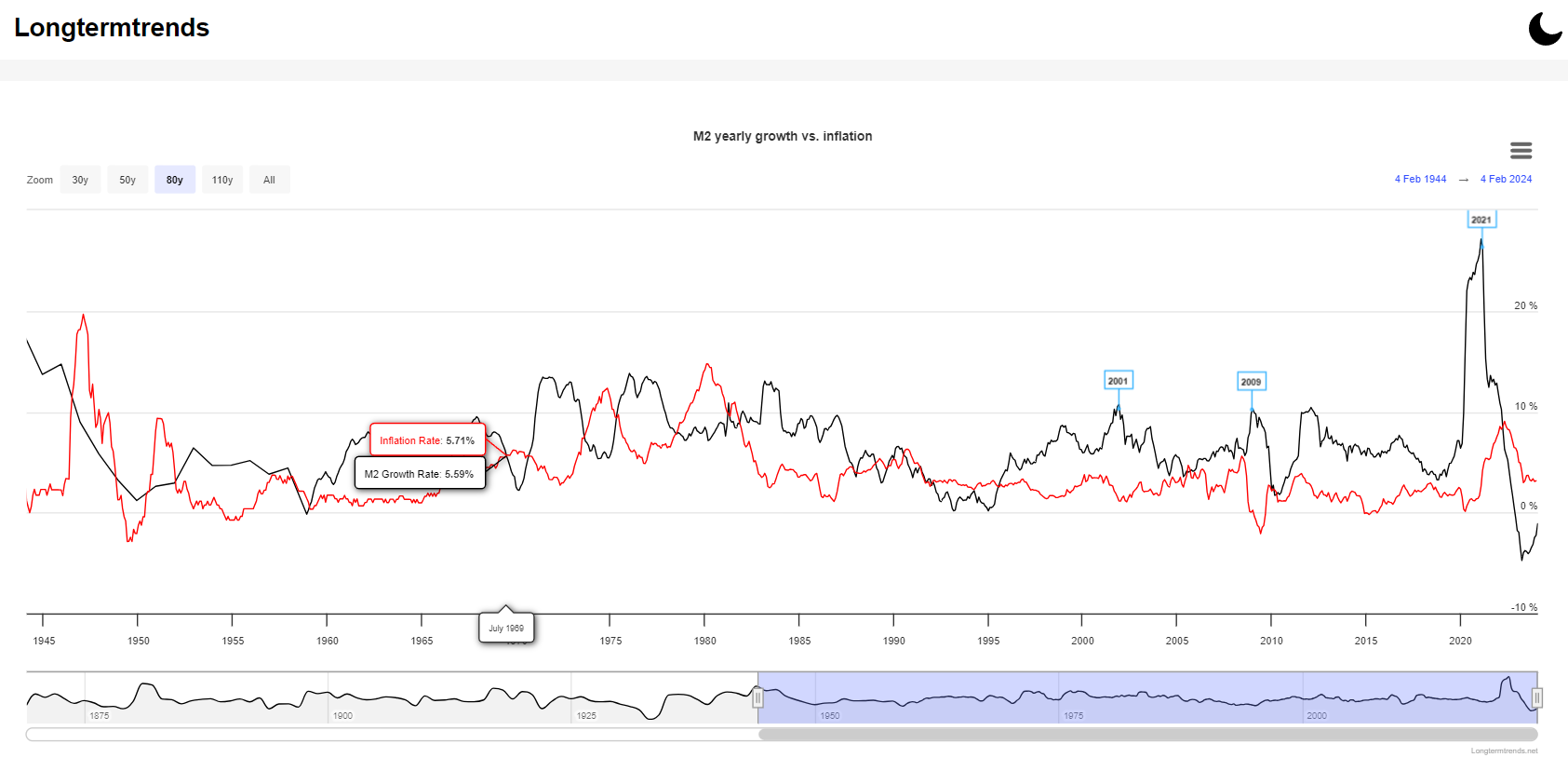
Source: Long Term Trends
One of the major issues is that Fed actions only impact the availability of money withing the banking system. So money only gets into the hands of individuals to impact the “Consumer” in the CPI indirectly- banks get more and cheaper capital via the Fed, and then they decide to lend it to borrowers (and disproportionately commercial ones), who then invest it to generate more profits and employment, etc, which eventually, and theoretically, makes its way into demand for goods. Milton Friedman’s view was more money chasing fewer goods.
It is fair to hypothesize that between 2009 to 2020 that banks were not an efficient conduit for Federal Reserve accommodation to reach consumers.
What inflated then? Stocks did.
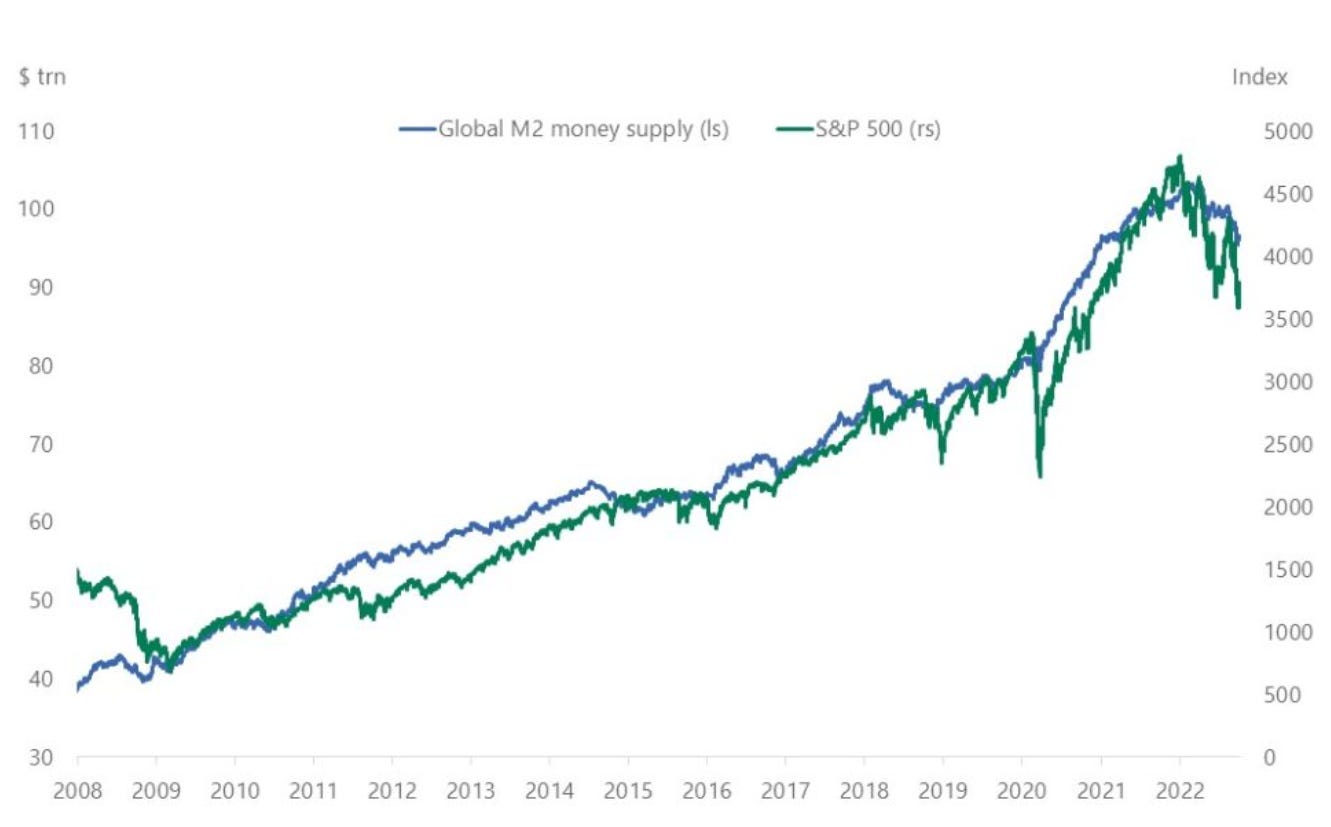
Source: https://www.apolloacademy.com/sp500-vs-m2/
Capital made available and cheaper to banks that doesn’t make its way to consumers is digested by the intermediaries- commercial organizations; and through various forms of financial engineering, the benefits accrue to financial assets like credit and equity.
The inflation from central bank accommodation shows up in asset price inflation and presents a clear view of winners vs losers.
In 2021, CPI exploded from low-single-digit levels to a 9%+ peak- where did that come from? According to https://www.usaspending.gov/disaster/covid-19, federal spending on COVID has totaled $4.4T, and this was put directly into the economy and consumers, which did result in too many dollars chasing too many goods.
Federal fiscal deficit spending is necessarily stimulative as these dollars are spent directly into the economy.
I will address another issue with this in a future essay- is CPI the right measure for inflation?