
After decades in the stock market, I became accustomed to hearing what could go wrong. Stock investors have good reason to focus on risk. Money can be lost in equities very quickly, while wealth is usually created much more slowly. Despite recessions, wars, financial crises, political upheaval, bad policy and countless predictions of much worse, businesses kept adapting. New technologies emerged. Productivity improved. Living standards rose. And stocks powered upward.
Human beings are exceptionally good at detecting threats. There is an obvious survival advantage to noticing what might kill you. Opportunities are different. Missing one usually doesn’t carry immediate cost.
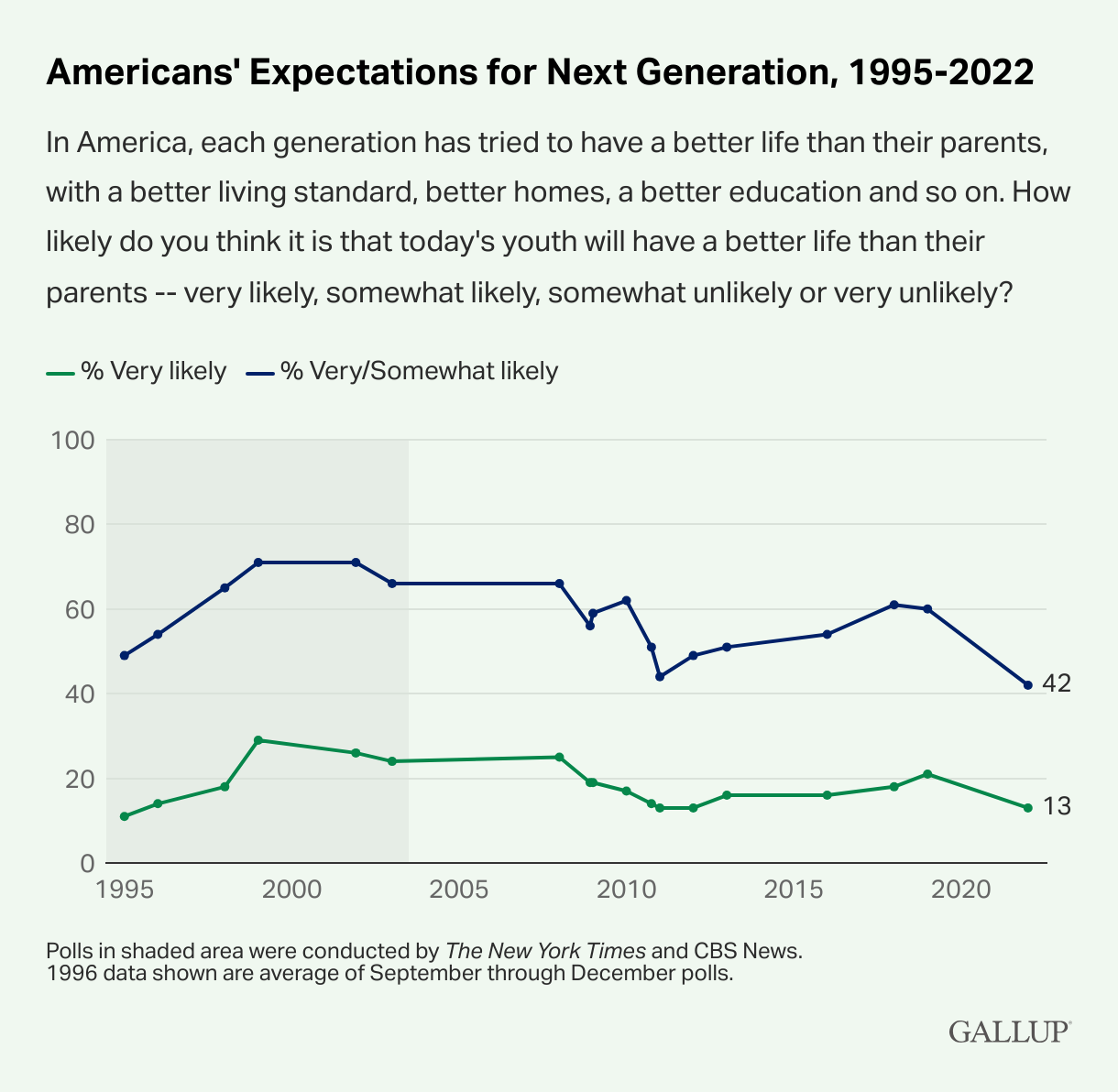
That asymmetry may help explain why we so readily see what is going wrong while overlooking what is gradually getting better. Setbacks arrive as events. Progress is more often a process. The pessimism isn’t confined to markets. At social gatherings, some version of “Man, our kids are so screwed” comes up surprisingly often. A Gallup survey found widespread doubt that today’s young people would enjoy better lives than their parents.
Is this pessimism justified? And, more importantly, what actually causes societies to become more prosperous? Those questions helped launch Exploring Prosperity two years ago. After more than 135 essays and nearly 100 interviews, the answers are not simple. But a much clearer pattern has emerged.
Prosperity Begins With Problem Solving
The most consistent source of progress is not a particular technology or natural resource. It is people finding better ways to solve problems. An entrepreneur finds a cheaper way to provide something people need. A scientist discovers a treatment for a disease. An engineer figures out how to generate more energy with fewer resources. These advances accumulate, and successful ideas spread.
Technology accelerates that process by expanding what an individual can accomplish. Greater efficiency does not mean that we eventually run out of useful work. As productivity increased, people gained both the income and the leisure to spend more on things that once occupied a tiny part of the economy. Entertainment is an obvious example. What was once a relatively small economic activity has expanded into an enormous industry producing movies, television, music, games, sports and countless forms of digital content. Greater productivity did not simply reduce the work required to meet existing needs. It created the capacity and demand for entirely new kinds of work.
AI may accelerate the same process. A small group can increasingly command capabilities that once required a much larger organization. By lowering the cost of solving problems, AI can make problems worth solving that were previously too small, too expensive or perhaps never even recognized as opportunities. The important question is not simply what AI can do. It is what millions of people will figure out how to do with it.
Ingenuity Is Not Enough
Human ingenuity is everywhere. Prosperity is not.
The difference often lies in whether people have the freedom and incentives to turn ideas into something useful. Property rights give people confidence that they can benefit from what they build. Competition rewards better solutions. Capital allows promising ideas to be tested and expanded. Money is another part of this institutional foundation. Its reliability affects the incentives to save, invest and plan for the future.
Institutions can accelerate this process or obstruct it. Regulations can protect people from genuine harm, but they can also raise the cost of experimentation.
Technology expands what is possible. Institutions and incentives help determine how much of that possibility becomes real.
Abundance Has a Supply Chain
Ideas still need resources. Artificial intelligence makes the point especially clear. More capable models require computing power. Computing requires chips, data centers and enormous amounts of electricity. Building that infrastructure requires capital, materials, skilled workers and permission to build.
Progress depends not just on invention, but on the energy, capital and infrastructure that allow useful ideas to spread. Abundance is not something technology simply delivers. It has a supply chain.
Are We Measuring the Right Things?
Economic statistics were never designed to measure prosperity itself. GDP, employment and inflation each measure particular aspects of economic activity. But technological change can widen the gap between those measurements and what people experience.
A technology that allows two people to accomplish what once required ten may increase productivity without increasing employment. It may also make products and services possible that previously cost too much to provide. GDP will capture some of that new activity, but neither GDP nor employment tells us how much better off people are because they can do things that were previously too expensive or impossible.
And economic measures capture only part of prosperity. Longer lives, better health, greater safety, stronger relationships, more leisure and greater freedom and control over our time are also forms of progress. So the question is broader than whether GDP is rising: How should we measure whether people are becoming more prosperous?
Pessimism Can Become an Obstacle
Dissatisfaction is essential to progress. Solving a problem begins with recognizing that something could be better. But recognizing a problem is different from believing that progress itself has failed.
The two lead to very different responses. If people believe problems can be solved, they have a reason to experiment, invest and take risks. If they conclude that technology, markets or economic growth mostly make life worse, the natural response is to constrain them.
Progress requires dissatisfaction with what we have and confidence that we can make it better. Pessimism can provide the first. It becomes an obstacle when it extinguishes the second.
Optimism Needs Evidence
None of this means that everything gets better. Progress can stall or reverse, and new technologies create new problems along with new capabilities.
But the long-term evidence of human progress is difficult to dismiss.
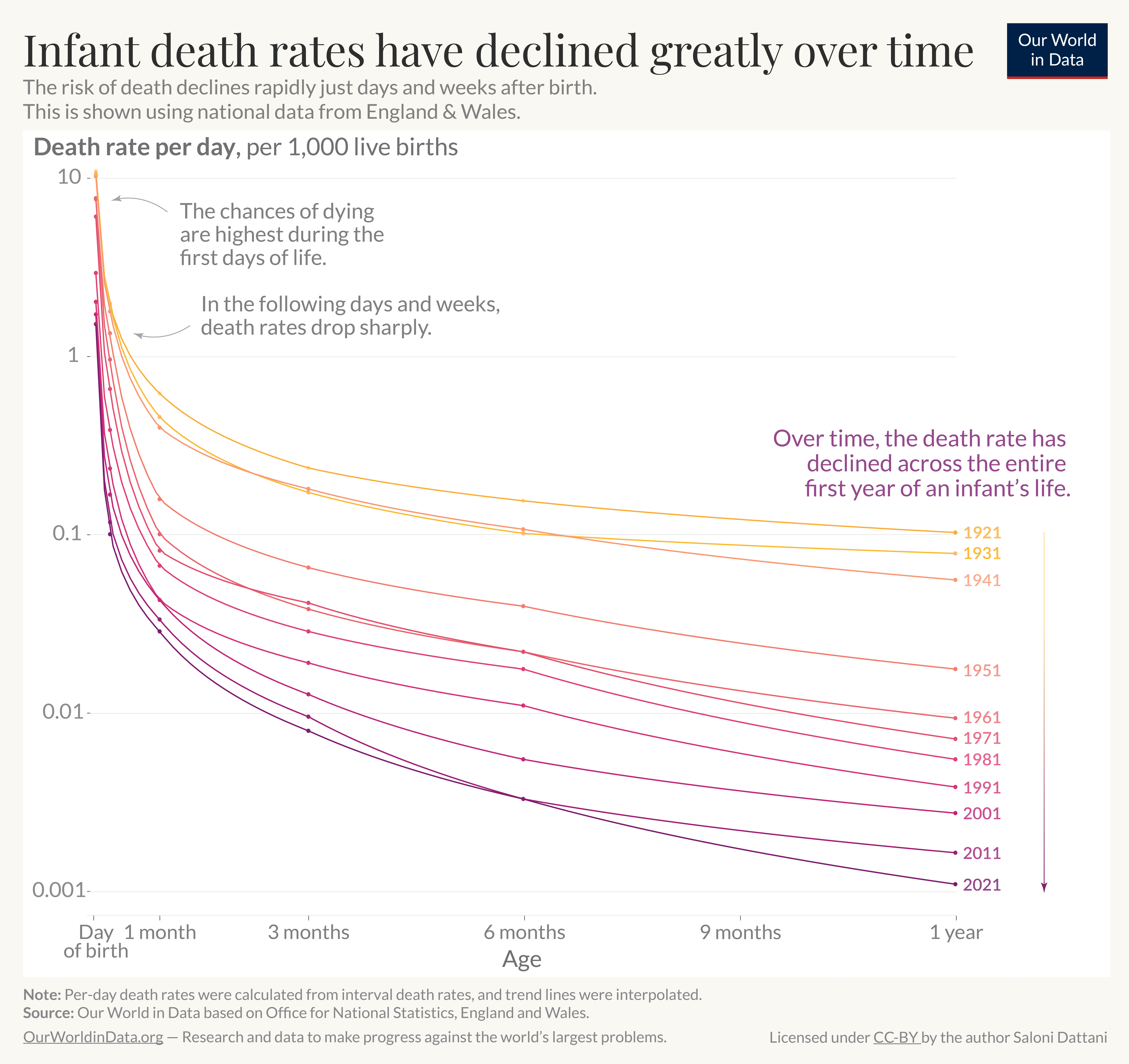
Why, then, can a world that has improved so dramatically still feel as though it is getting worse?
Part of the answer may be that we experience progress at the margin. We compare today with yesterday and our circumstances with our expectations, not our lives with those of people living 50 or 100 years ago. As prosperity increases, expectations rise with it.
The case for optimism does not rest on progress continuing automatically. It rests on the demonstrated ability of human beings to solve problems. The future will depend on whether people continue to have the freedom, incentives, resources and tools to solve problems. Setbacks will continue to arrive as events. Whether progress continues as a process depends on our ability to keep solving them.
That may be the central question behind Exploring Prosperity: What conditions allow human beings to keep solving problems faster than we create them?
Thank you very much to our sponsors:
Foundation.xyz: When it comes to protecting your Bitcoin, you shouldn’t have to simply trust the company that made your hardware wallet.
Foundation believes in verifiability over reputation. Its firmware and apps are open source, its builds are reproducible, and both Passport Core and Passport Prime have undergone independent hardware security audits. The point isn’t simply that Foundation says its products are secure. It’s that you can verify that for yourself.
Foundation is also expanding what users can control:
Passport Prime goes beyond Bitcoin. It can manage passwords and two-factor authentication codes, serve as a FIDO2 security key, and provide encrypted storage—all on a device you own and control. Foundation also plans to enable app sideloading, opening Prime to applications from independent developers.
Users can now add their own entropy. The latest Envoy and KeyOS releases allow users to introduce their own randomness when creating a seed, reducing reliance on the device itself to generate it.
Order a new Passport Prime and receive a free bumper case using Code PROSPERITY at → foundation.xyz
River Financial: If not cold storage for your Bitcoin, I’d highly recommend River for buying and holding- River is engineered to protect your Bitcoin over the long run. Use this link for discounts: https://river.com/signup?r=T7GGAF7G