
The introduction of Central Bank Digital Currencies (CBDCs) to Western democracies and major economies around the world is a legitimate concern that demands our attention. This emerging technology poses a very serious risk to continued prosperity if we consider individual liberty and the pursuit of self-interest as the building blocks of societal progress. The potential implications of CBDCs are far-reaching and could fundamentally alter the relationship between citizens and their governments.
To explore this critical issue, I recently interviewed Nick Anthony (Video HERE), a leading expert on CBDCs and author of the thought-provoking book "Digital Currency or Digital Control?". Anthony brings a wealth of knowledge to the conversation as a policy analyst at the Cato Institute's Center for Monetary and Financial Alternatives. He is also the co-designer of the CBDC Tracker, a comprehensive resource for monitoring global CBDC developments.
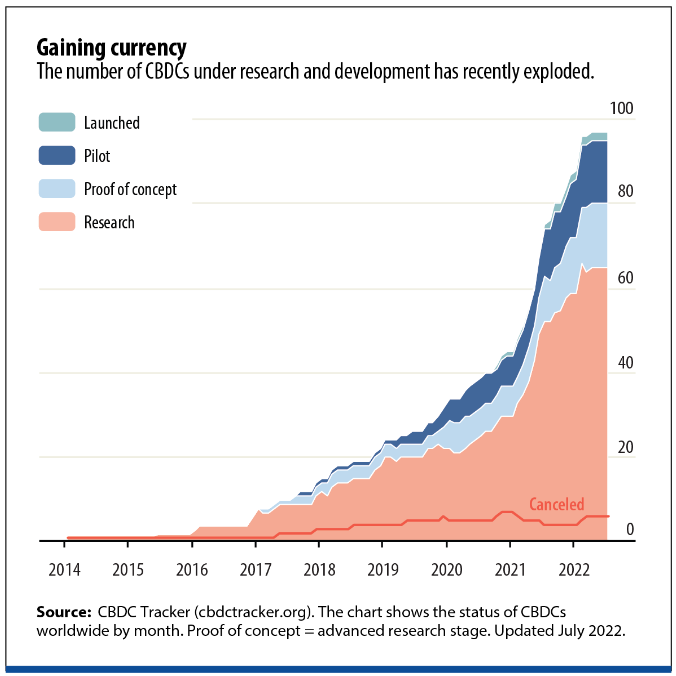
Our discussion delves deep into the potential risks and implications of this emerging technology, shedding light on aspects that are often overlooked in mainstream discourse about digital currencies. As you'll see, the issues surrounding CBDCs are complex and multifaceted, touching on economics, privacy, government power, and the very nature of money itself.
Thank you to our sponsor Truflation for supporting this important conversation. Visit Truflation at www.truflation.com.
What are CBDCs?
As Nick explains, "CBDCs fundamentally boil down to being a digital national currency provided by the government. It establishes a direct connection between you and the government, so we're talking about the government ultimately managing your money, overseeing your money, and effectuating transactions."
This definition sets the stage for a deeper discussion about the implications of such a system. Nick emphasizes that while we already have numerous digital payment options (debit cards, credit cards, PayPal, Venmo, cryptocurrencies), CBDCs are unique in that they involve direct government oversight and control of transactions.
The Purported Benefits of CBDCs
However, Nick quickly points out that these purported benefits are often overstated or achievable through less invasive means:
Financial Inclusion: Nick notes that about 70% of unbanked individuals do not want a bank account. Forcing financial inclusion through CBDCs may not address the real needs or preferences of this population.
Faster Payments: The implementation of a US CBDC would likely take years. Meanwhile, existing payment systems are already fast and continuously improving. Ironically, government involvement has often been an impediment to speedy transactions in various financial markets.
Monetary Policy Implementation: Proponents argue that CBDCs would make monetary policy easier to implement by allowing central banks to monitor spending patterns. In extreme cases, like in China, CBDCs could be programmed to restrict spending on certain items or categories. However, this level of control raises serious privacy and freedom concerns.
Reserve Currency Status: Some proponents fear that without a CBDC, the US dollar's reserve status might be threatened if other currencies adopt CBDCs. Nick argues this fear is misplaced. CBDCs are ultimately software that can be programmed for monitoring or control at any time, as evidenced by the low likelihood of voluntary foreign adoption of the Chinese CBDC. More importantly, the US dollar's reserve status is built on the strength of the US economic system and the global depth and breadth of dollar liquidity, factors not dependent on this specific technology.
The Real Risks of CBDCs
The conversation then turns to the significant risks associated with CBDCs:
1. Privacy and Surveillance
Nick paints a vivid picture of the privacy implications: "Look at your bank statement, look at what it says about you. It shows where you like to eat, maybe where you pay tolls in your commute or your vacations, where you're purchasing tickets for flights. It shows who pays you, where maybe you go to church, or where you spend your leisure time."
With CBDCs, this level of financial surveillance could be exponentially increased, giving governments unprecedented insight into citizens' lives.
2. Government Control and Manipulation
The potential for government overreach is a significant concern. Nick warns, "Unfortunately, when you have that much data available, the natural move for governments throughout history has been to try to act on that data to either control people in terms of limiting opposition and dissent, or to try to nudge people in terms of getting more, quote-unquote, socially desirable outcomes."
He emphasizes that while a CBDC system might start with good intentions, the infrastructure could be easily misused in various scenarios. Future administrations might exploit the system for political gain, governments might invoke emergency powers during times of crisis to exert greater control, or rogue individuals within the chain of command could abuse their access to this powerful financial tool.
Anthony's book provides numerous historical examples to support these concerns. In Chapter 5, he meticulously documents instances where governments have frozen or seized funds, highlighting that such actions are not limited to authoritarian regimes. Notably, he points out several cases where the US federal government has engaged in similar practices, underscoring that even democratic nations are not immune to the temptation of financial control when given the means.
These examples serve as a stark reminder that the concentration of financial power and data in the hands of any government, regardless of its current intentions, poses inherent risks to individual liberty and financial autonomy. The ease with which a CBDC system could be repurposed for surveillance or control makes it a particularly dangerous tool in the arsenal of state power.
3. Economic Disruption
Nick discusses how CBDCs could undermine the fractional reserve banking system. He explains that because CBDCs would be direct liabilities of the central bank and would be ineligible for inclusion as base equity, commercial banks couldn't use them to fund loans in the same way they use deposits. This would lead to higher costs for loans and potentially reduced economic growth. Furthermore, in times of stress, depositors would find the assurance of safety far more attractive than the meager 0-5% interest on bank deposits and would readily withdraw their deposits to purchase CBDCs, weakening banks in the global fractional reserve banking system. In fact, Representative Sean Casten (D-IL) in a House Financial Services Committee hearing on CBDCs in September, 2023 (HERE at time stamp 1hr 23 minutes), said:
"I'm left with…- Why do we care? We can talk about all the theory… but if we can't make the case that this actually makes sense for modern banking and by modern I mean banking as it has existed since the 12th century. If we are saying that "if we don't do it the Chinese will, then [we should welcome that]… "Have at it!"
4. Cybersecurity Vulnerabilities
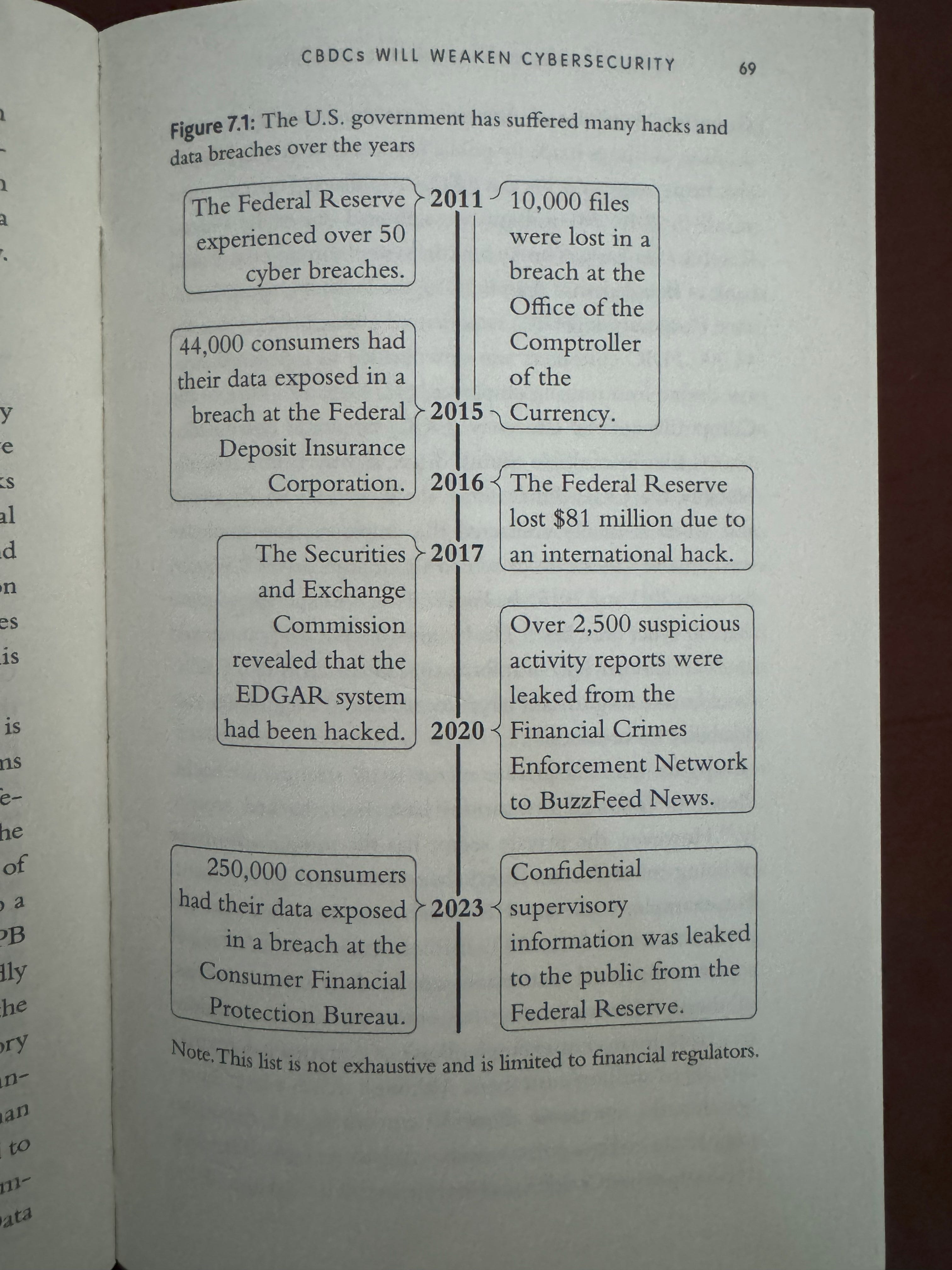
The interview touches on the cybersecurity risks associated with a centralized digital currency system. Such a system would be an attractive target for hackers and hostile nation-states, potentially putting the entire economy at risk.
Global Developments in CBDCs
The conversation shifts to global developments in CBDC implementation. Nick discusses several countries that have launched or piloted CBDCs, including China, Nigeria, and the Bahamas. He notes that these early adopters have faced significant challenges in achieving widespread adoption.
For instance, in the Bahamas, the central bank is considering forcing commercial banks to distribute the CBDC due to low uptake. In Nigeria, people showed little interest in the CBDC, and in China, initial enthusiasm waned once the government stopped offering incentives for its use.
The interview also touches on the European Central Bank's plans for a digital euro. Nick highlights a blog post from the ECB titled "Making the digital Euro truly private," which initially claimed the ECB didn't want to collect users' information. However, the post quickly clarified that the level of privacy would ultimately be determined by legislators, not the ECB.
The U.S. Perspective
The discussion then turns to the situation in the United States. Nick talks about recent legislative efforts to prevent CBDC implementation, including the "CBDC Anti-Surveillance State Act" passed by the House of Representatives. This bill aims to prohibit the Federal Reserve from issuing a CBDC directly to individuals.
Nick explains the nuances of the political debate surrounding this legislation. While there's bipartisan concern about the privacy implications of CBDCs, some Democrats voted against the bill due to concerns about restrictions on research and pilot programs.
The interview also touches on the potential impact of CBDCs on the U.S. dollar's status as the world's reserve currency. Nick argues that introducing a CBDC is unlikely to significantly affect this status, as the dollar's strength comes from the protections and economic stability offered by the United States, not from the specific form of the currency.
Alternatives to CBDCs
An important part of the discussion focuses on alternatives to CBDCs that could provide similar benefits without the associated risks. Nick highlights existing digital payment systems and emerging technologies like Stablecoins as potential solutions.
He argues that dollar-denominated and backed Stablecoins are already achieving most of the goals that CBDC proponents claim, such as faster payments and expanded reach of the dollar. Moreover, Stablecoins don't come with the same risks of government overreach and privacy violations.
The Corporate Transparency Act and Related Concerns
The interview briefly touches on the Corporate Transparency Act, which went into effect in 2024. This act requires corporations to disclose ownership information to FinCEN (Financial Crimes Enforcement Network). Nick sees this as a related concern, demonstrating the government's increasing appetite for financial data collection.
Key Takeaways and Warnings
Throughout the interview, Nick emphasizes several key points:
The lack of clear benefits for average citizens: "If there's no benefits for you and I, why are we risking that? Why do we want to put that on the table? Unless I was to be a government official who sees the opportunity for control that this offers, then the benefits might be there. But again, those are benefits only for the government, not for the average American."
The potential for rapid, drastic changes: "It's such a fragile proposal. You can have the government itself change it drastically if it's only a matter of software. Think of a physical note - there are a lot of security features. But what can be done is ultimately restricted to what can be put on that physical note."
The importance of protecting individual rights: "What makes the dollar so important is the protections that we have in this country, and the strength of the US economy. That's what's making people flock to it. That's what's making people want to hold it instead of other options."
Conclusion
The interview concludes with a sobering reflection on the potential long-term consequences of implementing CBDCs. Nick argues that while the technology might seem like a natural evolution of money in the digital age, it represents a significant threat to individual liberty and economic freedom.
He emphasizes the need for continued public awareness and debate on this issue. As Nick puts it, the choices we make today regarding CBDCs will have profound implications for the liberty and prosperity of future generations.
This interview serves as a crucial wake-up call, highlighting the alarming possibility that the US and other developed nations may proceed with issuing CBDCs. Such a move could dramatically shift the balance of power away from individuals and their freedoms, concentrating it instead in the hands of 'the state.'
This appears to be one of those potential developments that might threaten the well-being of the next generation by damaging some of the critical foundations of societal advancement.
Thank you to our sponsor, Truflation, for supporting this important conversation on the future of money and individual liberty.
About Nick Anthony: Nick Anthony is a policy analyst at the Cato Institute's Center for Monetary and Financial Alternatives, focusing on issues related to monetary policy, financial regulation, and cryptocurrencies. He is also the co-designer of the CBDC Tracker, a comprehensive resource for monitoring global CBDC developments.