Just a few months ago, the narrative around central bank digital currencies (CBDCs) seemed to be tilting in a concerning direction. With over 120 countries exploring or launching CBDCs, there was mounting pressure on the US to keep pace and avoid being left behind in this pivotal monetary evolution. The risks of inaction were framed around the potential threat to the US dollar's status as the global reserve currency.
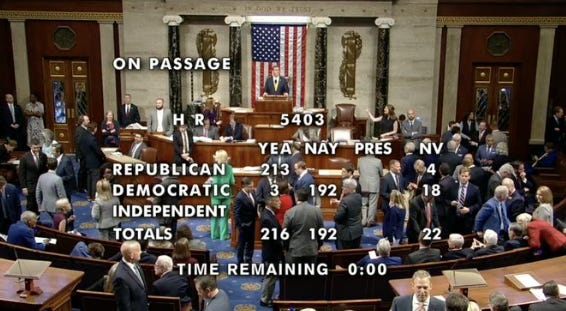
However, this week marked a monumental shift in the CBDC discourse, quite possibly the most significant development in the history of the digital asset industry. The passing of the CBDC Anti-Surveillance State Act by the House of Representatives, with a 216-192 vote, has thrust the dangers of CBDCs (see my interview with Nick Anthony HERE to learn more about the dangers) into the spotlight like never before.
Rewind to March 24th when I published my first article (HERE) of two (second article HERE) warning about the European Central Bank's enthusiastic pursuit of a digital Euro. At that time, the primary risk to the US was the fear of falling behind if the EU Parliament approved a CBDC, potentially providing cover for a digital dollar to follow suit. But this pivotal bill has flipped the script entirely.
CBDCs, by their very design as a central bank-issued, programmable digital currency, pose alarming risks of government overreach - enabling surveillance, control, and even cancellation of citizens' money. While the intentions behind CBDCs may have been more benign initially, this act's passage has amplified concerns about the potential abuse of such an all-powerful monetary tool.
There are undoubtedly factions within the US political establishment that would be tempted to wield such authority - from those favoring greater government control of the financial system to those seeking enhanced law enforcement capabilities. While the bill still faces hurdles in the Senate, it has elevated the CBDC debate to a new level of prominence in this election year.
Ironically, it is now the US that has shifted the global conversation, forcing the EU and other nations to grapple more seriously with the civil liberties implications of CBDCs, rather than just the fear of missing out on the latest financial innovation. This act serves as a powerful counterweight to the narrative of inevitability surrounding CBDCs.