Prosperity is one of humanity's greatest aspirations, yet its definition remains elusive and multifaceted. How can we truly measure something so impacted by factors like infant mortality, access to education, or the devastating effects of war? Focusing solely on economic metrics like GDP paints an incomplete picture.
While pursuing a deeper understanding of the pillars that enable truly prosperous societies is crucial, it's also important to acknowledge the monumental challenges facing much of the world today. Record levels of national debt burdens in the United States and across the developed world pose systemic risks and structural deficits that could hinder future economic competitiveness and investment. Geopolitical instability, threats to democratic governance norms, wealth inequality, and the existential climate crisis further contribute to an undercurrent of pessimism about humanity's ability to create broad-based prosperity. Overcoming these generational headwinds will require innovative policies, a renewal of sustainable development commitments, and resilience in the face of disruption.
While numerous academic approaches have attempted to quantify prosperity over the years, most still overemphasize financial elements. Others have incorporated a wider array of human-centric variables, though their methodologies necessarily lack consistency.
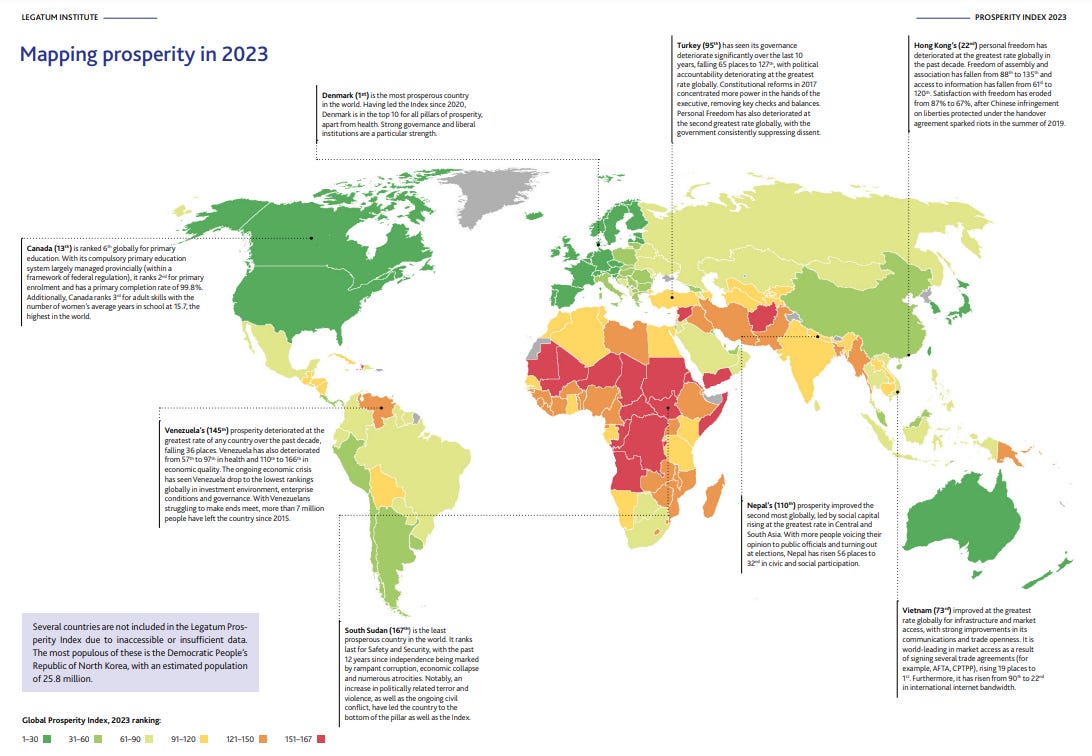
The Legatum Institute (HERE) has created an excellent framework and monitors 12 categories in countries around the globe which allows for valuable relative fluctuations that provide rich context.
After reviewing many of these existing frameworks, I've distilled the vital components of prosperity into four interconnected pillars:
1. Governance, Rule of Law, and Security - The foundational bedrock enabling prosperity is an environment of safety, fair governing institutions, and robust legal protections for citizens' basic freedoms.
2. Economic Competitiveness - While financial affluence alone does not equate to prosperity, factors like investment climates, business-friendly policies, and quality market infrastructure undeniably facilitate it.
3. Human Capital Development - A thriving society requires continual cultivation of its people through access to quality education, healthcare, and spiritual nourishment.
4. Living Standards and Social Fabric - Beyond just income levels, true prosperity is enriched by living conditions, social inclusion, individual liberties, and an environment conducive to human flourishing.
Through interviews with global experts across these disciplines, "Exploring Prosperity" aims to shed light on which policies and cultural values enable nations to not just grow wealthier, but to empower their citizens with the freedom and opportunity to lead truly prosperous lives.
Click HERE to subscribe to YouTube Channel “Exploring Prosperity”.
Find “Exploring Prosperity” on Apple Podcasts.
From the Legatum Institute: