
Imagine: October 7, 2025, a cyberattack on Taiwan’s power grid briefly darkens Taipei, while Chinese naval exercises intensify nearby. Within hours, American officials debate whether this constitutes an act of war. The incident passes without escalation—but this scenario illustrates how quickly modern crises could spiral beyond leaders’ control, much like the summer of 1914, when a single assassination in Sarajevo triggered the collapse of a century of relative peace. Will we avoid such traps, or fall into the same patterns that have repeatedly destroyed peace between great powers?
This generation inherits both an unprecedented 80-year stretch without major power warfare and the responsibility to preserve it. To succeed, we must understand not just what sustains peace, but what historically destroys it. The Long Peace rests on safeguards discussed in our previous essays on war—nuclear deterrence, economic interdependence, democratic institutions, international law, the end of imperialism, historical memory of catastrophic losses, cultural evolution away from romantic militarism, and demographic changes that favor peace—but can these modern tools prevent the same triggers that have repeatedly shattered peace between great powers?
How Major Wars Are Triggered
Scholars studying the causes of war typically examine five levels of analysis: individual leaders, substate groups, state characteristics, bilateral relationships, and the international system. The following analysis identifies recurring patterns across these levels that have historically triggered conflicts between great powers.
Power Transitions and Succession Crises have ignited conflicts throughout history. The Thucydides Trap—when a rising power challenges an established hegemon—drove Athens and Sparta to war, just as Germany’s industrial rise threatened British dominance before 1914. Succession disputes over who would inherit Spanish or Austrian territories consumed Europe for decades. Today’s parallel is unmistakable: China’s economic rise challenges American hegemony across trade, technology, and territorial claims. The question isn’t whether this creates tension, but whether modern institutions can manage the transition peacefully.
Resource Competition and Trade Disputes have repeatedly escalated into warfare. The Seven Years’ War began over colonial expansion, while Japan’s attack on Pearl Harbor followed an American oil embargo that threatened Japan’s imperial ambitions. Great powers have consistently fought over access to critical materials, markets, and strategic territories. Contemporary echoes include competition over rare earth minerals essential for technology, Arctic resources unlocked by climate change, space-based resources and strategic positions, and maritime chokepoints controlling global trade. Yet technology visionary Elon Musk envisions a different future, predicting “an age of abundance where you can have any goods or services that you want.” As AI and robotics drive production costs toward zero, Musk argues there will be “no meaningful limit to the economic output of humanity,” potentially making traditional resource competition obsolete—if we can manage the transition peacefully.
Alliance Entanglements transform local conflicts into world wars. In 1914, Austria-Hungary’s declaration of war on Serbia triggered a domino effect through interlocking alliance systems, pulling Russia, Germany, France, and Britain into a continental catastrophe none initially wanted. Modern commitments carry similar risks: American guarantees to Taiwan, NATO’s Article 5 pledges, and defense partnerships across the Indo-Pacific create scenarios where regional disputes could escalate into global conflicts. Yet today’s alliances may be more stabilizing than their 1914 predecessors. NATO is explicitly defensive rather than offensive, operates through transparent democratic institutions rather than secret royal agreements, and has grown stronger—with Finland and Sweden joining after Russia’s Ukraine invasion—rather than fragmenting under pressure. The alliance’s expansion demonstrates nations seeking security through collective defense rather than being dragged reluctantly into others’ conflicts.
Miscalculation and Accidental War pose perhaps the greatest danger. Leaders consistently underestimate conflict duration and costs—expecting quick, decisive victories that become prolonged disasters. Technical failures compound human error: in 1914, Germany’s rigid mobilization plans, dependent on precise railway timetables to move millions of troops, became unstoppable once initiated. When Kaiser Wilhelm II had second thoughts about attacking France, his military chief declared it impossible to alter the plan—mobilization was “like a wound-up clock” that couldn’t be stopped. Today’s automated systems—from nuclear command structures to cyber warfare capabilities—create similar risks of conflicts escalating faster than human judgment can intervene.
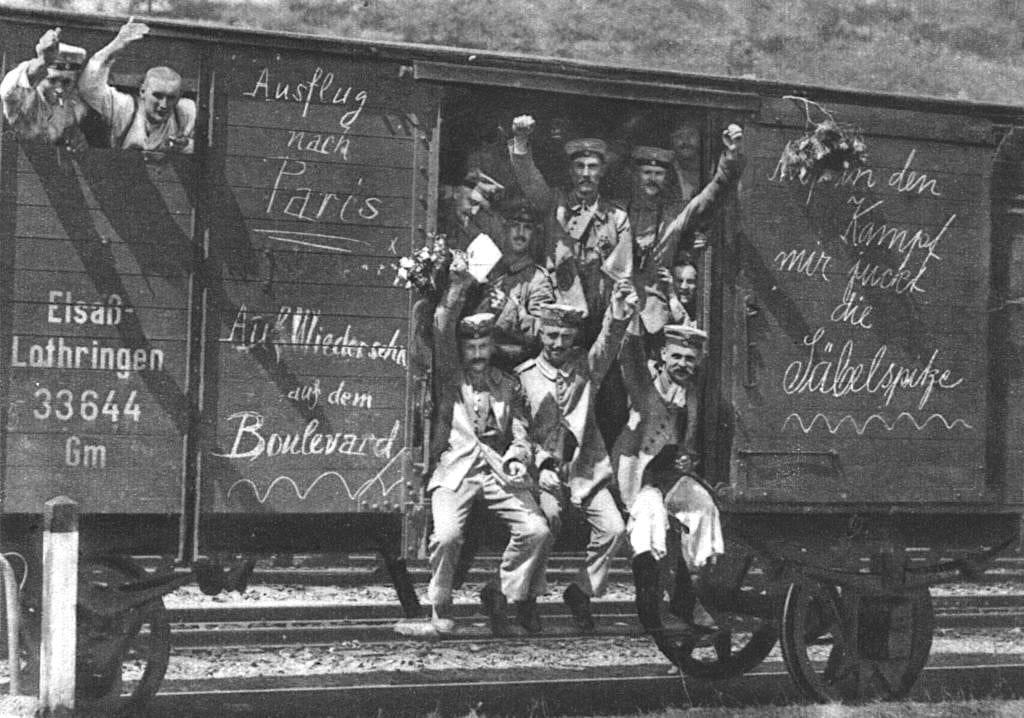
Ideological and Regime Conflicts pit incompatible worldviews against each other. The Thirty Years’ War devastated Europe over religious differences, while the Napoleonic Wars saw revolutionary France battle conservative monarchies. World War II represented democracy’s existential struggle against fascism. Today’s ideological tensions appear less pure and potentially less dangerous. China has embraced market economics and global integration despite maintaining authoritarian politics, while the United States faces internal divisions over fundamental questions of democracy and capitalism. This ideological “muddiness”—compared to the stark fascism-versus-democracy or capitalism-versus-communism divides of the past—may actually reduce the likelihood of wars fought over competing world systems.
Can Our Safeguards Hold?
These triggers haven’t disappeared—they’ve evolved. Power transitions now involve economic and technological competition alongside military rivalry. Resource disputes include critical minerals and cyberspace alongside traditional territories. Alliance commitments span global networks rather than European balance-of-power systems. Miscalculation risks include artificial intelligence and autonomous weapons alongside nuclear arsenals. Ideological conflicts pit democratic values against authoritarian alternatives.
Yet we possess tools previous generations lacked. Nuclear weapons make direct great power conflict suicidal rather than merely costly. Economic interdependence creates switching costs that make war economically devastating for all parties. Democratic institutions provide checks on “glory-drunk leaders,” while international law offers alternatives to military solutions. Real-time communication and diplomacy can prevent the misunderstandings that escalated past crises.
The test ahead will determine whether these modern safeguards can overcome ancient triggers. History suggests pessimism—great power wars have occurred roughly every 34 years, making our 80-year peace statistically remarkable but potentially fragile. Yet history also shows human capacity for learning and institutional innovation.
Preserving the Long Peace
The Long Peace represents an extraordinary human accomplishment—enabling unprecedented prosperity, technological advance, and human flourishing. Unlike natural phenomena, it requires conscious maintenance. Each generation must choose cooperation over conflict, negotiation over violence, and long-term thinking over short-term advantage.
Understanding what triggers wars between great powers—power transitions, resource competition, alliance entanglements, miscalculation, and ideological conflict—remains essential precisely because these forces persist in new forms. Our modern safeguards of nuclear deterrence, economic interdependence, democratic constraints, and international institutions offer hope, but only if we recognize both their power and their limits.
The next time crisis erupts—and it will—the question won’t be whether historical triggers still apply, but whether we’ve learned enough from 80 years of peace to prevent them from destroying what previous generations built and this generation inherited.
Thank you to our sponsors:
Truflation: Learn about what prices are actually doing by going to https://truflation.com/marketplace/us-inflation-rate
Foundation: Protect your Bitcoin using the latest off-line technology with easy-to-use Passport. Their next product, Passport Prime will protect all passwords off-line with even-better technology. https://foundation.xyz/
River Financial: If not cold storage for your Bitcoin, I’d highly recommend River for buying and holding- River is engineered to protect your Bitcoin over the long run. Use this link for discounts: https://river.com/signup?r=T7GGAF7G