
This week, gold made history.
The metal hit a new all-time high of $4,393 per ounce, climbing a shocking 30 percent in just 56 days—from $3,362. That’s the fastest 30 percent rise ever recorded for gold, surpassing the previous record set in 1979, when gold made the same move—but over 90 days. Back then, the world was reeling from inflation, oil shocks, and collapsing trust in government spending. Today’s surge is different in its causes but similar in its message: people are searching for something solid again.
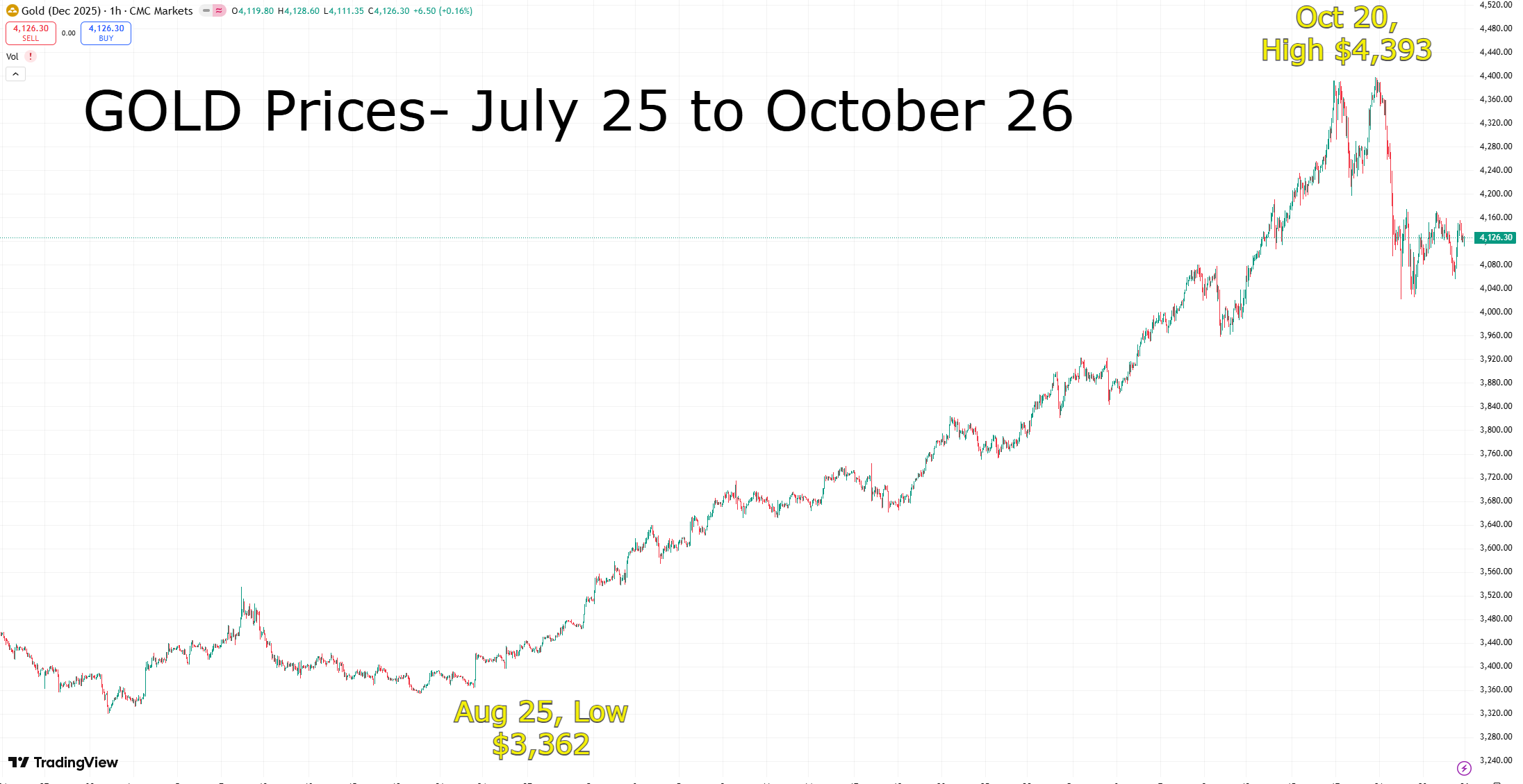
Source: https://www.tradingview.com/chart/
That’s why I decided to re-post a portion of an earlier roundtable I hosted with Lyn Alden, Bob Murphy, and Troy Cross about what the world might look like if the U.S. had reconnected the dollar to gold back in 1971.
And it’s not just the chart that makes this a good time to revisit the idea of sound money. Saifedean Ammous, the economist and author of the best-selling Bitcoin book, The Bitcoin Standard, just announced on X that his new book, The Gold Standard, will be available on November 14. Given the influence of his other two “Standard” books—The Bitcoin Standard and The Fiat Standard—this next one is bound to explore, in his meticulous style, what our world might look like if gold had remained the foundation of global money for the past century.
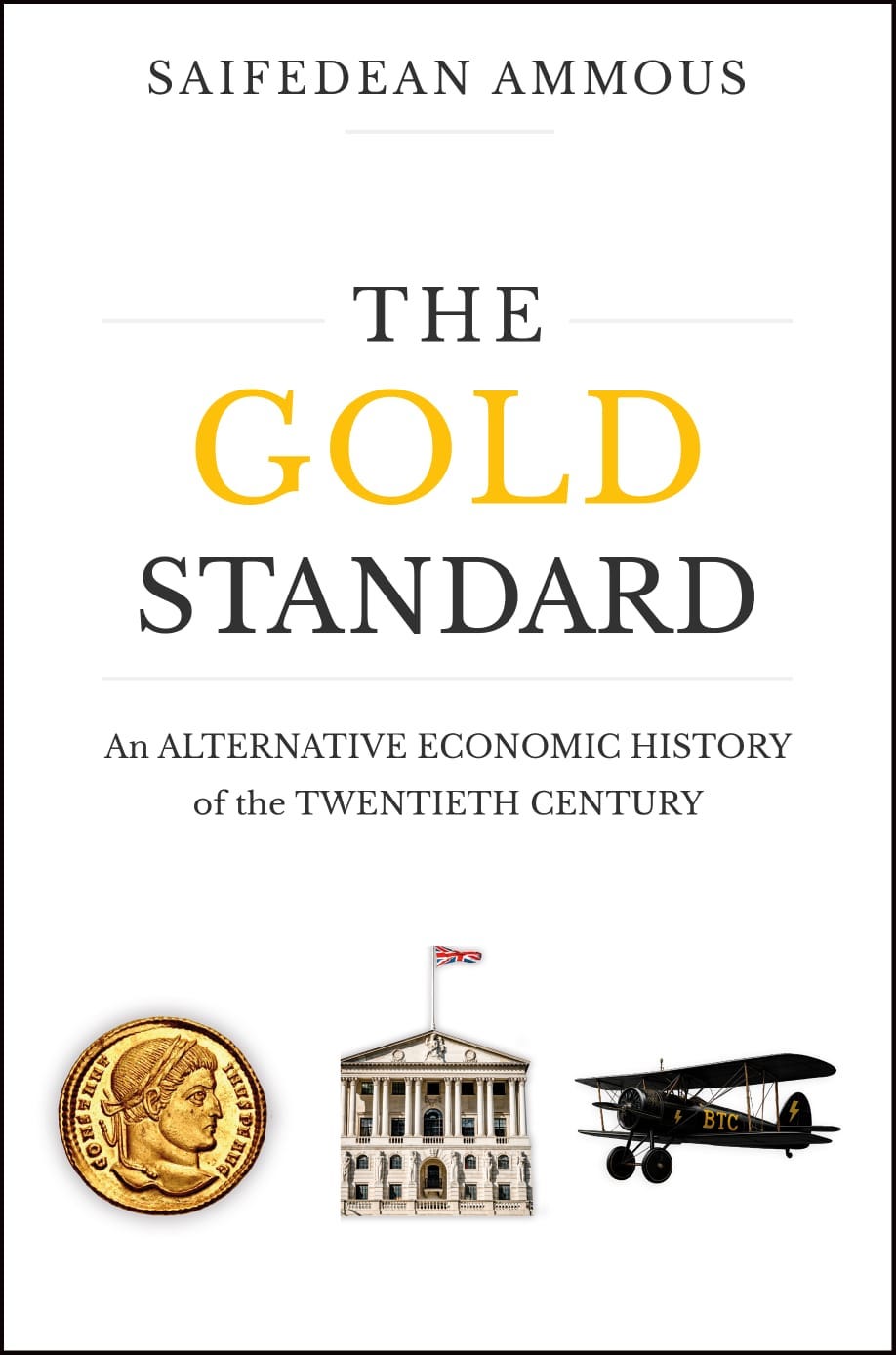
You can order it now HERE.
Both the price action and the intellectual momentum point to the same question: What would society look like under sound money?
What if the Dollar Had Reconnected to Gold?
In this conversation, our group explores that question from three perspectives—economic, historical, and philosophical.
Lyn Alden begins by distinguishing between productive debt and arbitrage debt. In a fiat system where the money supply expands by 7 percent a year but savers are told inflation is only 2 or 3 percent, corporations have every incentive to borrow endlessly. Procter & Gamble, for instance, sells billions in long-term bonds not because it needs the cash, but because it’s profitable to short the currency itself. The result, Lyn argues, is a world awash in arbitrage debt—financial engineering that thrives only in an inflating system.
Bob Murphy, taking the Austrian-economist lens, argues that this isn’t a bug in fiat—it’s the point. Under a sound-money standard, households could save directly in money that holds value, rather than being forced into speculative markets to preserve purchasing power. Deflation, he says, wouldn’t stifle investment. Prices and wages would adjust, just as they did in the 19th century, when falling prices coincided with massive innovation and growth. In that world, capital would flow to those with genuine expertise—not to those merely seeking to outrun inflation.
Troy Cross builds on that idea by focusing on price discovery. When money itself is distorted, prices stop conveying the truth about what people value and what resources are actually scarce. Without honest prices, economies drift into misallocation—too much capital where it’s easy to borrow, not enough where real productivity happens.
From Malinvestment to Inequality
As the discussion moves forward, the group examines the broader consequences of fifty years of easy money. Inflationary policy, they argue, not only distorts markets but also reshapes society.
When governments can create money at will, the rewards concentrate around those closest to the source—financial institutions, corporations, and asset owners—while wage earners lag behind. That dynamic explains much of the widening wealth gap since the 1970s. In 1973, inequality began climbing long before tax cuts or deregulation became political talking points. The true inflection point came right after Nixon closed the gold window.
Lyn describes this as the difference between innovation-based wealth and financialization-based wealth. In the Gilded Age, the wealthy built railroads, factories, and electricity grids—real assets that lifted everyone’s living standards. Today, wealth often comes from arbitrage and leverage—profits extracted from the money system itself.
The Bigger Question
By the end of the conversation, one question dominates: Could we ever return to hard money?
Murphy is skeptical that governments, addicted to the power of the printing press, would ever voluntarily give it up. Alden notes that technology may force their hand: digital, verifiable assets like Bitcoin make it possible to move sound money as fast as fiat. And Cross points out that individuals can already opt out to some degree—saving in assets that resist debasement, even if governments never reform.
That may be the most important takeaway. Whether through gold, Bitcoin, or future innovations, people are beginning to rebuild a system of value that doesn’t depend on government promises.
This clip captures the essence of that shift—how money, trust, and progress intertwine—and why the return of gold’s luster isn’t just about price. It’s about rediscovering the foundation of prosperity itself.
Thank you very much to our sponsors:
Truflation: Truflation: BUY Truflation products/services and save 10% using code BOBDEW10. Learn about what prices are actually doing by going to https://truflation.com/marketplace/us-inflation-rate
Foundation: Protect your Bitcoin using the latest off-line technology with easy-to-use Passport. Their next product, Passport Prime will protect all passwords off-line with even-better technology. https://foundation.xyz/
River Financial: If not cold storage for your Bitcoin, I’d highly recommend River for buying and holding- River is engineered to protect your Bitcoin over the long run. Use this link for discounts: https://river.com/signup?r=T7GGAF7G