
The weakest bull case in Bitcoin’s history may turn out to be beside the point.
As Bitcoin was soaring last year to its high near $126,000, institutional demand was surging. Public treasury companies and Bitcoin ETFs were purchasing multiples more Bitcoin than was being mined. Derivatives markets were expanding rapidly, making participation safer and more accessible for large investors. Even governments and central banks appeared closer to formal participation than at any prior moment. By almost any structural measure, the bull case looked stronger than at any time in its history.
Then the price declined anyway. Markets look for stories that explain price movement, but structure does not move as quickly.
Today, with Bitcoin trading between $65,000 and $70,000, it is difficult to construct a clean narrative for why it should rise meaningfully from current levels. Technological fears have resurfaced, most prominently the concern that sufficiently advanced quantum computing could derive private keys and expose dormant coins. The same financial infrastructure that enabled long exposure also enabled sophisticated shorting. If one is searching for a broadly shared explanation for immediate upside, it is hard to find.
Over the past few weeks at two major conferences, speaking with builders, allocators, and operators in the ecosystem, what stood out was not panic. It was steadiness. Conviction was disconnected from recent price action.
The object itself has not changed. Seventeen years into its existence, Bitcoin has not altered its core monetary rules. Upgrades such as SegWit and Taproot expanded functionality without modifying the issuance schedule or the fixed supply cap. Blocks have been produced every ten minutes. The supply curve has remained predictable. Proposals to alter those core constraints have failed to gain consensus on the main chain.
Even a credible quantum breakthrough would threaten exposed private keys, not the issuance schedule or the consensus mechanism itself. The monetary constraints would persist. The network’s defining feature — a fixed and transparent supply path — would remain intact.
Most technologies evolve because their premises prove incomplete. Business models are revised. Products are redesigned. Here, the system has stayed the same. The variable is human adoption.
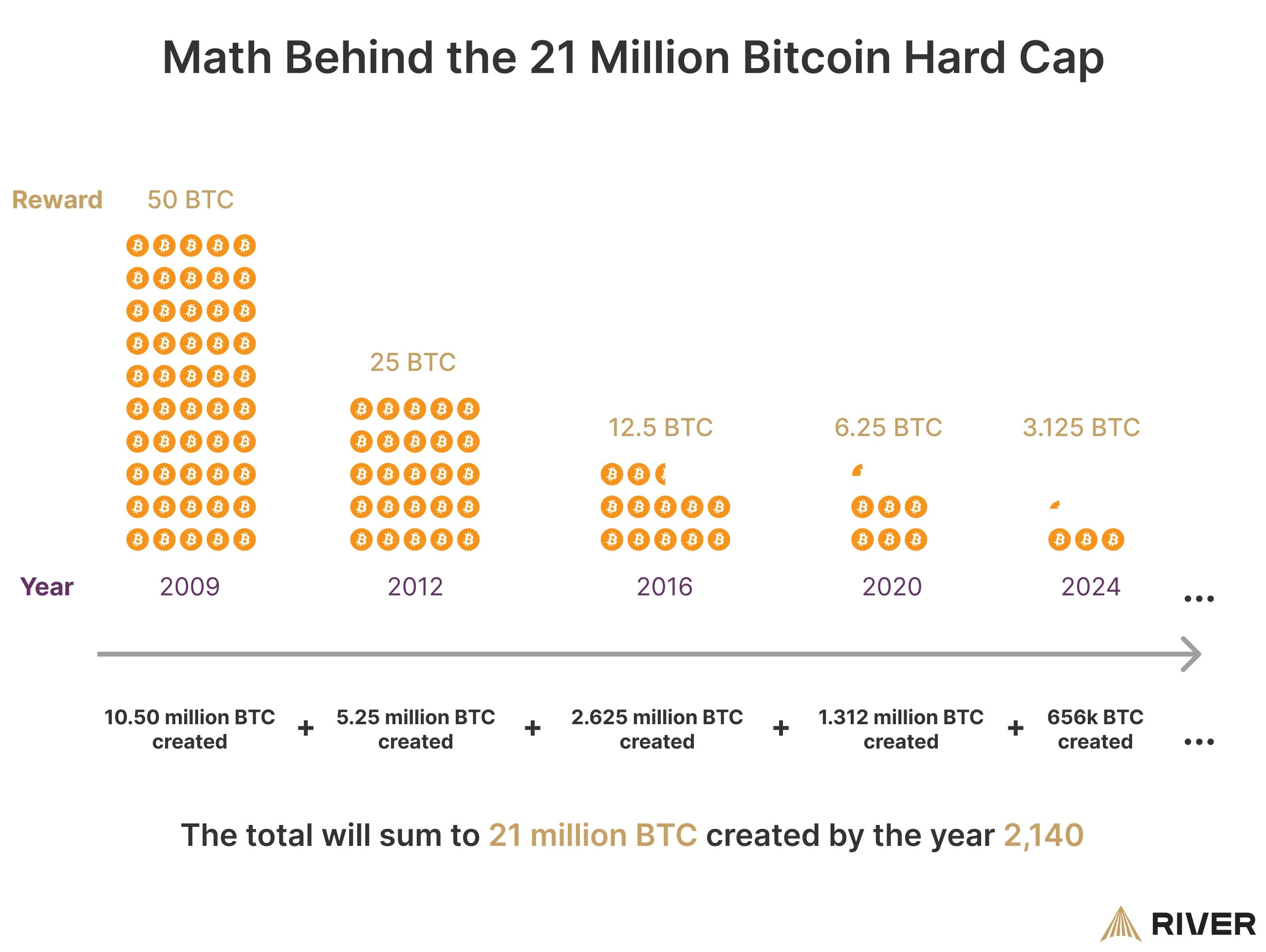
That distinction reaches beyond price. Exploring Prosperity centers on a simple question: are the institutions that underpin rising living standards becoming more reliable, or less so? Money sits at the center of that inquiry. It is the unit in which contracts are written, savings are stored, and capital is allocated. When money becomes politically elastic or structurally unstable, long term planning grows more fragile.
Bitcoin proposes a different arrangement. Its rules are transparent. Its supply schedule is known. No committee can accelerate issuance. No election alters the protocol. Participation is voluntary. Individuals adopt it not because they are instructed to, but because they judge its properties useful.
In countries with stable currencies, that usefulness may appear abstract. In places where inflation erodes savings or capital controls restrict movement of funds, the appeal is immediate. Cross border transfers already occur on Bitcoin rails. Savings that might otherwise be diluted can be held outside domestic banking systems. Those uses do not depend on a rising chart. They depend on the existence of a network whose rules resist alteration.
Adoption in such contexts is not speculation. It is a response to credibility erosion.
Years ago, in a private conversation, a senior Microsoft executive described to me the early phase of Satya Nadella’s tenure. Inside the company, confidence was tentative. The strategy was clear, but belief in its ultimate success was uneven. Execution moved ahead regardless. The stock began to respond before a fully articulated narrative emerged. Only later did consensus align with what had already been built.
Economic systems often follow the same pattern. A tool proves itself in practice before it becomes widely accepted as necessary. Digital communication did not wait for universal agreement about its implications. It spread because it reduced the cost of connecting people.
Bitcoin reduces the cost of establishing a form of money whose supply rules are insulated from political discretion. Whether that insulation proves consequential depends on demand for such a property. The past century has been an extended experiment in discretionary monetary policy, now operating alongside historically record sovereign debt levels. If fiscal systems remain disciplined and currency credibility strengthens, demand for alternatives may remain limited. If monetary credibility weakens, demand may expand. The protocol does not adapt to sentiment. It simply persists.
This reframes the present moment. The absence of a persuasive short term bull case does not resolve the long term question. The relevant inquiry is not whether a compelling narrative circulates today. It is whether a non sovereign monetary network addresses recurring structural vulnerabilities.
Prosperity rests on trust. People invest, innovate, and defer consumption because they believe the rules governing exchange will endure. Property rights, contract enforcement, and stable units of account form the background conditions for growth. When those conditions weaken, growth slows. When they strengthen, cooperation expands.
Bitcoin is an experiment in reinforcing one layer of that foundation without relying on political discretion. It does not eliminate the state. It does not repair fiscal imbalances. It does not prevent poor policy choices. What it offers is an opt out system whose monetary policy cannot be altered by decree.
If that feature proves valuable, adoption will follow. If it does not, the network will remain marginal. The outcome will be determined less by narrative coherence than by institutional performance in the surrounding world.
At present, the bull case appears weaker than at many prior moments. The price has declined despite strong institutional demand. Skepticism is visible. That condition does not establish inevitability. It clarifies the stakes.
The network either provides durable value in a world of shifting monetary regimes, or it does not. If public finances remain stable and currency credibility strengthens, it may occupy a narrow role. If monetary systems experience repeated strain, the presence of a neutral alternative may widen the margin for individual agency.
Institutional innovation has always shaped prosperity. Joint stock companies once seemed experimental. Independent central banks were once controversial. Legal frameworks for limited liability were once untested. Each altered the scale of cooperation that was possible.
Bitcoin belongs in that lineage of experiments. Its success is uncertain. Its rules are not.
US Debt: GDP
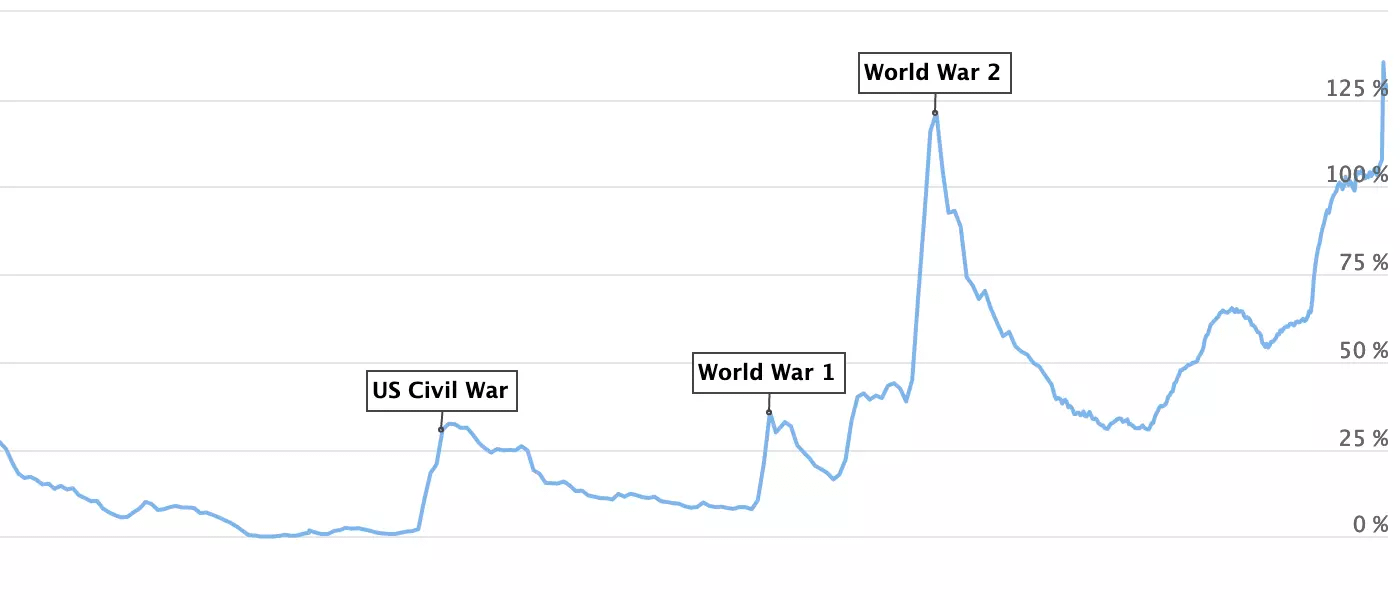
The absence of a neat story today says little about its long term relevance. What will determine that relevance is not sentiment at $65,000 or $70,000. It is whether the underlying problem of monetary credibility persists. If fiscal and monetary discipline prove politically unattainable, alternatives governed by fixed rules will not require persuasion, they will require only relevance.
Thank you very much to our sponsors:
Truflation: BUY Truflation products/services and save 10% using code BOBDEW10. Learn about what prices are actually doing by going to https://truflation.com/marketplace/us-inflation-rate
Foundation: Protect your Bitcoin using the latest off-line technology with easy-to-use Passport. Their next product, Passport Prime will protect all passwords off-line with even-better technology. https://foundation.xyz/
River Financial: If not cold storage for your Bitcoin, I’d highly recommend River for buying and holding- River is engineered to protect your Bitcoin over the long run. Use this link for discounts: https://river.com/signup?r=T7GGAF7G